
In brief
- A clarification that never gets a written answer stays as an assumption in the bid, and the assumption surfaces on site as a variation.
- Attendance at a clarification meeting proves nothing. Ask for the written minutes, the list of bidders who received them and the revised priced items.
- The person assessing a clarification needs to have priced and built the trade, not just sat through a course.
Contents
Tender clarifications training gaps in Gabiley leave bidders pricing a scope nobody has confirmed in writing. A query about ground conditions, water, access or a missing drawing goes to the client, and the answer either comes back in a numbered addendum to every bidder or it does not come back at all. When it does not, each bidder fills the hole with its own assumption, and the lowest bid may simply carry the largest one.
What does a clarification meeting actually settle?
Nothing, until the answer is written down and sent to every bidder.
A meeting can explain the drawings, walk the plot and collect questions. That is useful. It settles a query only when the client or the engineer issues the answer as a numbered addendum, with the revised scope or the reissued drawing attached, and sends it to every bidder before the deadline. Ask the person chairing the meeting what the record of the session is, who gets a copy and how a bidder confirms receipt. Ask the municipal engineer's office whether it holds the site records for the plot, such as borehole logs or previous foundation notes, since those may change a ground-related query. Confirm any technical limit against the project specification or the engineer, not against what was said in the room.
If the answer stays verbal, the bid still carries the assumption. Money is committed against it at award.
How does an unanswered clarification reach the site?
It returns as a claim, a dispute or a rebuilt element that was priced on a guess.
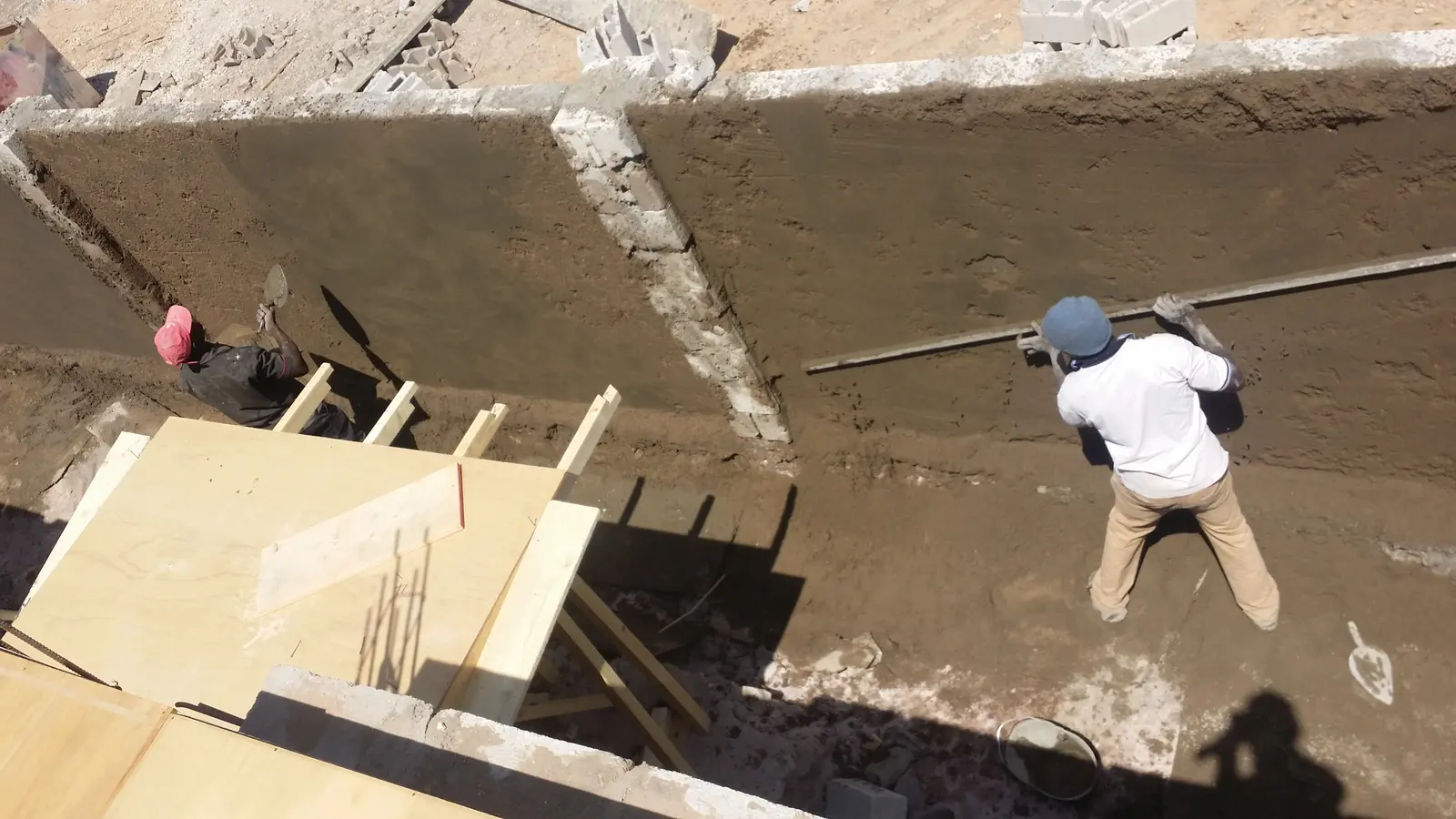
The paper path is short. A bidder cannot get a straight answer so it prices its own assumption, and the bid wins. A supervisor on site reads the bid against the drawings and finds a gap, so work items get renegotiated or stood down while the client decides. Rain, hard ground, blocked access or a missing connection point can each turn the assumption into a cost the contract may not have allowed for. Check what the contract says about differing site conditions and about how a variation is instructed before treating the gap as anyone's liability. Walking a recently completed site nearby shows how such gaps were handled in practice: ask who instructed the change, whether it was issued in writing and how it was measured.
Why does training not always close the gap?
A course can teach the format of a clarification register. It cannot supply the trade experience that tells an assessor which answer matters.
Someone who has priced foundation work, read a ground report and rebuilt a failed slab will spot the query that changes the scope. Someone who has only attended a workshop may record the query and miss its cost. Practical assessment gaps show up at exactly this point: the assessor needs to judge whether a bidder's assumption is reasonable, and judgement comes from having carried that risk. Workplace learning barriers make it worse. Staff who would learn fastest are often the ones holding the site, so they cannot leave for a multi-day course, and the course goes to whoever can travel.
Close it with the work itself. Ask the assessor to write the assumption on the query, the priced item it sits against and the addendum that would remove it. Run that as a short exercise on a live bid from the current tender, with a senior estimator, an engineer and a supervisor in the room for one afternoon rather than a week away.
What to do next
Put one line in the bid review sheet for every open query: the question, the bidder's assumption, and the addendum number that would close it. Do not award while that column is blank. If the client has not answered, ask the client in writing for the answer and for confirmation that it will reach every bidder. Log the date you asked and the date the reply arrives.
Frequently asked questions
Should a bidder price an item that has no written answer?
Price it on a stated assumption and set it out in the bid, with a note that the price changes if the answer differs. Check what the tender documents and the contract allow for a revised scope, and ask the client to issue the answer as a numbered addendum.
Does attending the clarification meeting count as competence?
No. Attendance shows someone turned up. Competence shows in whether the written query identifies the assumption, prices it and tracks the answer to the addendum.
Local reporting: this article is written for building work in Gabiley and Somaliland. Ground conditions, prices and rules differ between places; confirm the details for your own site.