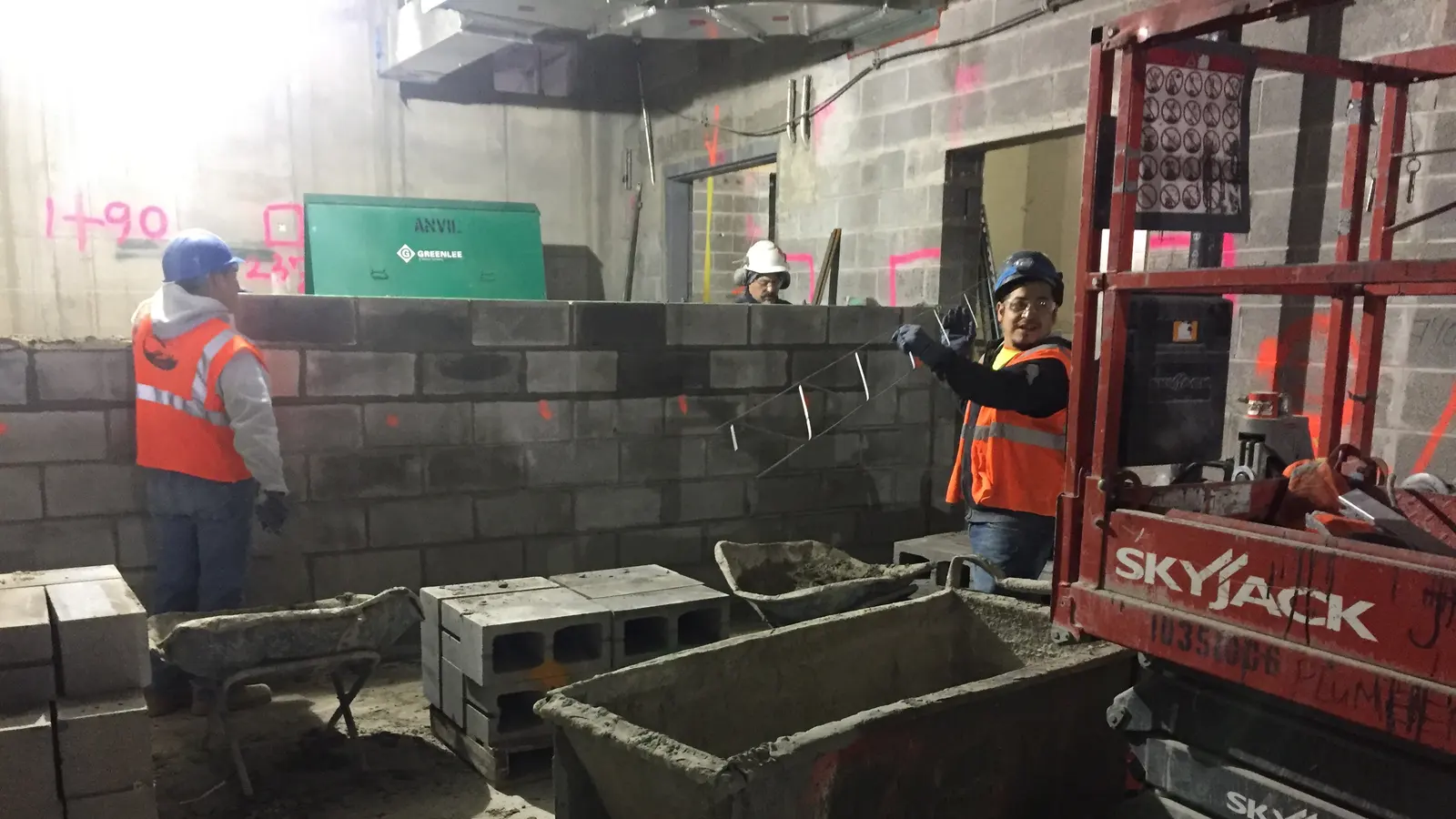
_(46898318062).jpg)
In brief
- A block that is laid before it has cured loses strength no matter how good the mix was.
- Supervision gaps show up in the paper trail: no delivery records, no cube results, no rejections logged.
- Clamp down on cement content, block storage and sampling of units, and weak masonry units get caught before they are built in.
Contents
Who checks block strength on a Borama building site? In most builds the answer is nobody with a test record: the mason decides from habit, the supervisor signs the delivery note and the client finds out at handover. That gap in supervision of block strength checks lets weak masonry units reach the wall, where they are hard to see and expensive to remove. Closing it starts with agreeing who samples, who labels and who records.
How do weak blocks get past a supervisor?
Weak units pass because nobody tests them before they are laid. On many sites the gap starts at the gate: a lorry arrives, blocks are offloaded, and no one records the maker, the date or the batch. Concrete blocks gain strength over time, and general practice is to cure them before use and to sample units for testing, but that rule only works if someone owns the sampling. A supervisor juggling three sites may sign off on visual appearance alone. The fix is a simple register: delivery date, maker, batch, quantity, and the date units were sampled and sent to a laboratory. Ask the laboratory in advance what size and number of units it needs and how long results take, so sampling does not stall the wall.
What does weak supervision look like in the finished wall?
It looks like blocks that crumble at corners, snap under a trowel or soak up mortar. Supervision gaps are not only missed tests. They include storing blocks on bare ground where they wick moisture and salts, stacking them green, and letting masons adjust a weak mix with extra water on the spot. When mortar and block are both weak, the wall loses bond and the first place it shows is at openings, corners and any point where a pipe chase is cut. Walk a recent building by the same crew and press a scraper into a block face away from the render. Ask the site team for the block test record and the curing log. If neither exists, treat the wall as unverified, not as approved.
How do you close the gap on the next block-laying stage?
Write the checks into the method statement and the payment schedule before work starts. Name the person who samples blocks, the person who keeps the register and the person who can reject a delivery. General practice is to sample units at an agreed frequency set by the project specification or engineer, so agree that frequency in writing and confirm it with the engineer rather than assuming a number. Add a hold point: no block laying above the first course until the register, storage and sampling record are reviewed. For imported or locally made blocks, ask two suppliers for written confirmation of cement content and curing time, and keep those letters with the delivery notes. If a batch fails, the contract should say who removes the work; check what your contract allows before you instruct anything.
What to do next
Take the block delivery register and the last three test records to your next site meeting in Borama. If either is missing, stop new block laying above the first course, photograph the storage and sampling area, and ask your laboratory or project engineer what is needed to test a sample from the current batch.
Frequently asked questions
Can I test blocks that are already built into the wall?
Partly. A laboratory can core or cut a unit from the wall, but results reflect the wall condition, not the delivered batch, and cutting damages the block. Testing delivered stock before laying is the cheaper route.
How often should blocks be sampled?
Frequency is set by the project specification or engineer. Agree it in writing at the start, name the person who samples, and keep the delivery register with the results.
Local reporting: this article is written for building work in Borama and Somaliland. Ground conditions, prices and rules differ between places; confirm the details for your own site.