In brief
- Concrete mixing water must be clean enough to drink, and any doubt about a source needs a cube comparison against potable water before batching starts.
- Chloride and sulfate in mixing water add to the salt load that reaches the rebar, which matters for buried and coastal reinforced concrete.
- Record the water source and test result per batch so an engineer can trace a defect back to its cause.
Contents
Test the water before you trust it: mixing water should be clean enough to drink, and any source you have not used before needs a cube comparison against potable water before batching starts.
Water is the one ingredient nobody photographs and everybody assumes. It carries dissolved salts into the fresh concrete, and those salts stay in the hardened pore structure next to the steel. In Somaliland, water for a site can come from a shallow well, a berkad, a tanker, a borehole line or a store tank that has sat open through a hot season. Each of those can behave differently, so the check is the same whatever the source: look at it, ask where it came from, and test it before the first structural pour.
What makes water unfit for mixing concrete?
Water that carries visible mud, leaves, oil or a strong smell can raise the water demand of the mix and feed organic matter that slows strength gain. High dissolved salts, particularly chlorides and sulfates, add to the aggressive load reaching the steel and the cement paste.
Practical limits exist for mixing water, and they are given as general practice: the water should be clean and free of harmful amounts of oils, acids, alkalis, salts and organic material. Your project specification or engineer sets the limit that applies to the pour, so confirm the figure with them rather than working from memory. Sulfates attack the hardened cement paste from inside, and chlorides start the electrochemical reaction that corrodes embedded steel once the protective alkaline environment is lost. The two behave differently but both enter through the same bucket.
Do three checks on site before you approve a source. Draw a sample in a clean clear container and hold it against daylight: colour, cloudiness and floating matter tell you a lot. Smell it. Ask where it came from and whether the tank or the well is shared with livestock, washing or a latrine. If the answer is vague, treat the source as unknown and test it.
How do salts in mixing water reach the rebar?
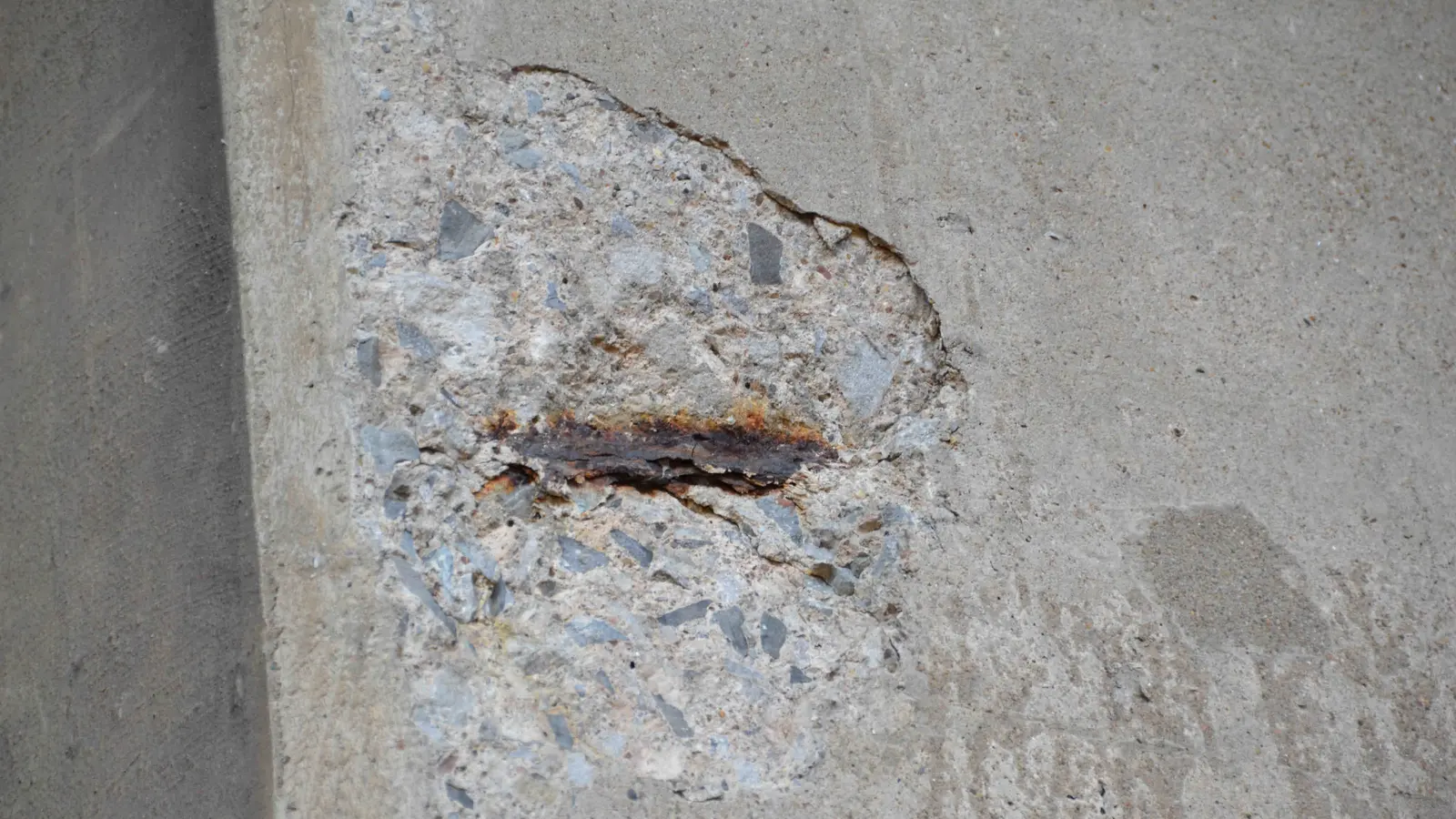
Chloride in the mixing water sits in the pore solution from the moment the concrete sets. Water evaporates, the concrete dries, and the chloride stays behind, sitting against the steel under whatever cover the design gives it.
Surface chlorides from salt air or ground water can be kept out by dense concrete, adequate cover and a good curing regime. Chlorides cast into the mix sit on the wrong side of that defence. A buried foundation, a ground slab or an element in a coastal location carries both routes at once: salt from the ground and salt from the water that went into the mix.
The mechanism matters because it affects how much cement and how much cover you need. Concrete with a low water-to-cement ratio and enough cementitious content has a tighter pore network, so less water and less chloride move through it. Adding extra water on site to make a stiff mix flow does the opposite, so the water you approve at the source and the water you allow at the mixer are the same decision. Check the mix design before you batch against it; if the design assumes potable water and the site is supplying something else, the design is now a different mix. Ask your engineer to review the mix before the first pour if the source changes.
How do you test a suspect water source on site?
Mix two sets of cubes from the same cement, sand and aggregate. Use the water source you want to approve for one set and clean potable water for the other, then cure both the same way and break them at the same ages.
This is a comparison test, not a strength test on its own. Both sets must be batched to the same workability, because if the suspect water needs more water to reach the same slump, the difference shows up in strength. Break the cubes at 7 and 28 days and compare them. A close result supports approval of the source. A clear drop in strength means the source does not go into structural concrete until the engineer decides otherwise.
The pots, the moulds and the curing tank all need clean water too, so keep one container marked for testing and one for washing. Where a laboratory is available, send a sealed sample in a clean bottle with the source written on the label. Where it is not, keep the cube comparison, write down the source, the date and the result, and hold the record with the pour records. On a coastal or buried element, pair that record with the cover and mix records. Concrete that is dense, well covered and well cured gives the steel its protection, which is why the water check sits alongside those, not in place of them. For quantities of cement and aggregate to match the approved mix, use the concrete calculator and keep the batching record with the water record.
What to do next
Sample the water source you plan to use and set two sets of cubes, one with that water and one with clean potable water, batched to the same workability. Take the results, the source details and the proposed mix to your engineer, and ask them to confirm the water and mix against the project specification before the first structural pour. Keep the record on site with the pour records.
Frequently asked questions
Can you use well water or berkad water for concrete in Somaliland?
It can be used if it is clean and the cube comparison against potable water shows no loss of strength, but the decision belongs to the project engineer against the specification. Test the source rather than assuming a well or a berkad is suitable.
Does adding more cement fix bad mixing water?
Not reliably. Extra cement does not remove the chloride or sulfate that the water already carried into the mix. Treating the source, or bringing in clean water, is the safer route.
How often should the water source be retested?
Retest every time the source changes, including a new tanker, a new well or a shared tank that has been cleaned or refilled. Keep the records with the batch records so a future defect can be traced.
Sources
Local reporting: this article is written for building work in Somaliland. Ground conditions, prices and rules differ between places; confirm the details for your own site.
Photo: Achim Hering, CC BY 3.0, via Wikimedia Commons
