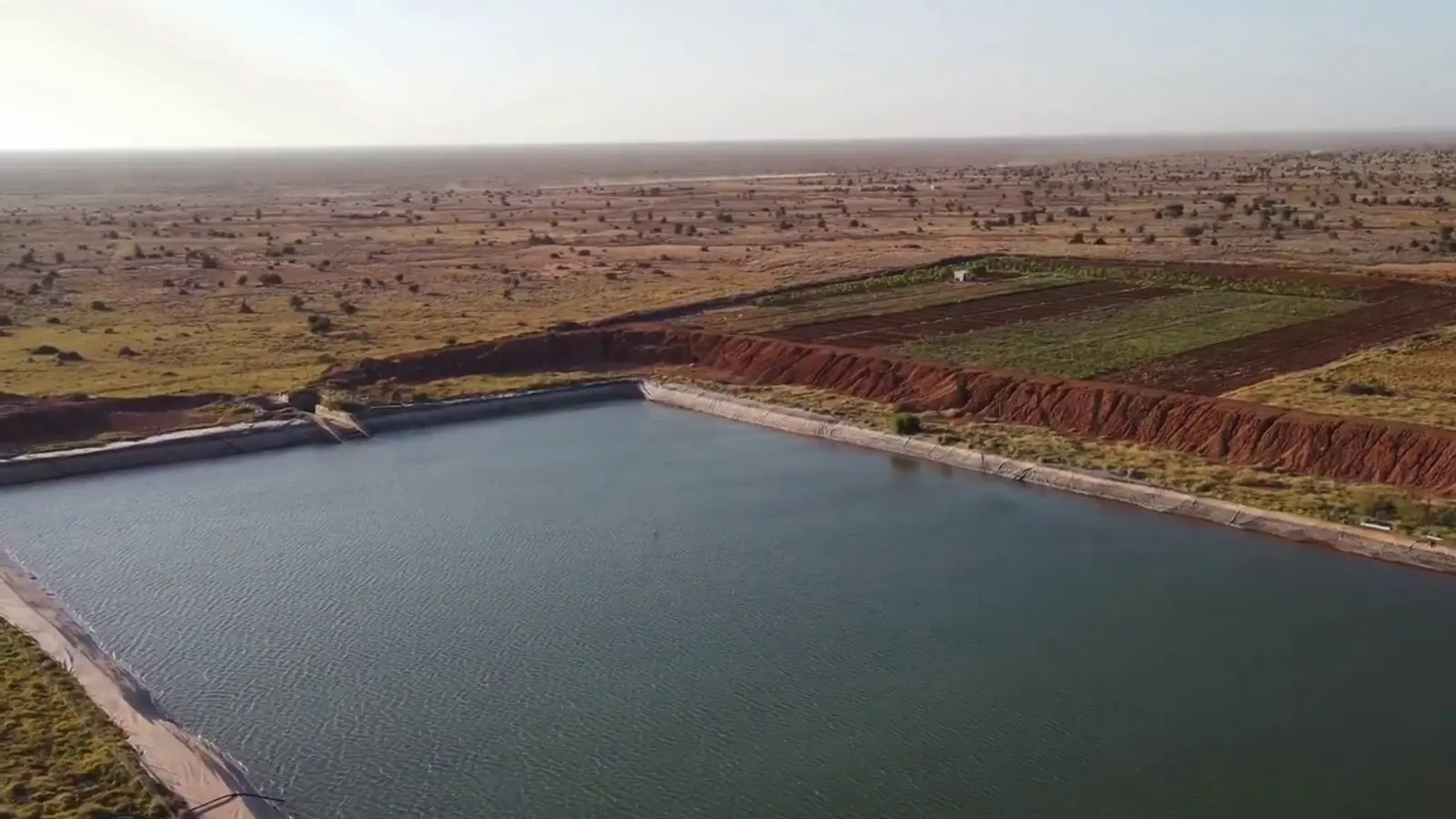
,_water_reservoir.jpg)
In brief
- The World Bank reported on 12 December 2022 that two studies preceded the WALP pilot, one technical and one on the socioeconomic aspects of sand dams.
- Acceptance was an open question because in a sand dam the water is not visible, stored beneath the sand rather than in an open reservoir.
- At Rabaable in Puntland the Bank reports that 20 minutes of rainfall in May 2022, just as the sand dam was finished, sustained the community until September.
Contents
The World Bank reported on 12 December 2022 that two studies ran before its Water for Agropastoral Livelihoods Project (WALP) pilot in Puntland and Somaliland. One looked at the development potential of a wadi from a technical angle, the other at the socioeconomic aspects of sand dams. The acceptance question was whether communities would take to a store they cannot see.
What the source records
The Bank states that sand dams looked a good choice mainly because they mitigate evapotranspiration. It records the concern that communities might not accept them, since in a sand dam the water cannot be seen because it is stored in the sand. Senior Water Supply and Sanitation Specialist Tesfaye Bekalu is quoted in the account: sand acts as a temporary reservoir cover, protecting the water underneath from evaporating under the sun. For the Rabaable sand dam in Puntland, the Bank reports that 20 minutes of rainfall in May 2022, just as the dam was finished, sustained the community until September. The account sits in the World Bank write-up of the Biyoole project.
What it means on site
A sand dam stores water in the voids of riverbed sand, so the mechanism to explain to a client or a community is that the sand itself is the cover. Less standing water at the surface can mean less evaporation, which is why the Bank's pre-pilot technical study favoured the approach in a wadi setting. What a community sees day to day is damp sand, a raised dam wall and abstraction points, not a visible reservoir. That gap is what the acceptance study was examining, and it is a question of trust in the structure and in whoever operates it. The Bank's quoted figure of what that rainfall sustained is a reported observation at Rabaable, not a yield calculation for another site.
What the source does not establish
The source reports that the studies examined acceptance; it does not give their findings on whether communities did accept the dams, nor their methods, sample or dates. The Rabaable rainfall account is an observation reported by the Bank, not a measured recharge figure. Project totals in the account cover the wider programme, so no national total should be read into Puntland alone. The account is dated 12 December 2022 and does not describe the present condition of any dam.
What to do next
If a sand dam or subsurface dam is under consideration, ask the implementing ministry's project implementation unit for the socioeconomic study and its survey questions, and ask the engineer for the wadi bed and dam wall drawings with the abstraction arrangement.
Frequently asked questions
Why would a community question a sand dam?
The water sits in the sand and cannot be seen, so users cannot judge the store by looking at it. The World Bank reported that this visibility gap was the reason its pre-pilot study examined acceptance.
Does the source give the acceptance study's results?
No. The 12 December 2022 account states that two studies were conducted before the pilot, one technical and one on socioeconomic aspects, but does not report their findings.
Sources
Local reporting: this article is written for building work in Somaliland and Puntland. Ground conditions, prices and rules differ between places; confirm the details for your own site.