
In brief
- The World Bank reported on 12 December 2022 that the Rabaable sand dam was finished and its stored water supplied construction of an asphalt road into Garowe.
- The same account records 20 minutes of rainfall in May 2022 sustaining the community until September, which the source gives as a reported observation.
- The source describes a pilot and later project scale; it does not give road length, contract value or the road's present condition.
Contents
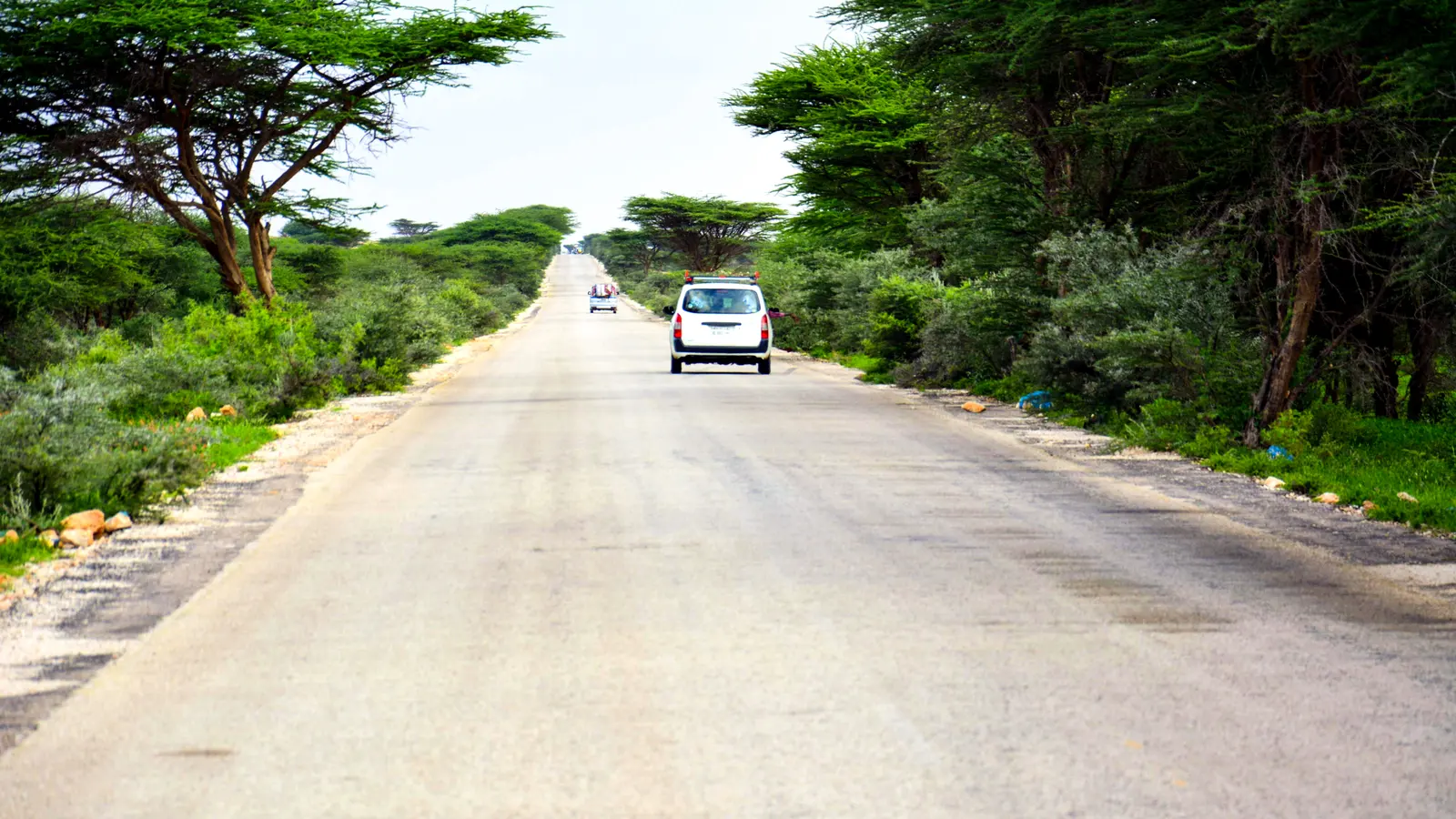
The World Bank reported on 12 December 2022 that stored water at the Rabaable sand dam in Puntland supplied the building of an asphalt road into Garowe, the region's administrative capital. The account appears in the Bank's Nasikiliza blog on the Biyoole project and states that the community could provide water for the construction work. The same passage records that 20 minutes of rainfall in May 2022, just as the Rabaable dam was finished, sustained the community until September.
What the source records
According to the World Bank account, the Biyoole project had completed 50 water points in remote parts of Somalia in the two years before December 2022. At Rabaable, the source states that the sand dam was finished and that rainfall in May 2022 carried the community through to September, allowing irrigation, cultivation, livestock care and date sales to nearby towns. The source also records that the community could provide water for the asphalt road build into Garowe, and that the road would link farming to larger markets. See World Bank.
What it means on site
For a road job in a dry inland area, the mechanism is worth noting: water stored in sand behind a dam can be drawn for compaction, curing and batching instead of carting it from elsewhere. A contractor or client can ask the water point's operators how much can be drawn per day without cutting the community supply, and ask the project engineer how the water is filtered before it reaches the plant. General practice is to test any source water for silt, salinity and sulphate before it goes into concrete or sprayed work, and to confirm acceptance limits against the project specification or the engineer. The source does not describe the road's water volumes, the batching arrangements or the treatment used, so those remain questions for the site record.
What the source does not establish
The account is a funder's narrative, not a completion certificate for the road. It does not give the road's length, contract value, lane configuration or completion date, and it does not say whether construction had finished by December 2022 or continued afterwards. The rainfall account is a reported observation, and national programme totals should not be read as Puntland figures. The source also does not state who built the road, under which contract, or what condition it is in now. A completion certificate, the contract documents, or an inspection report from the highway authority would show the present state.
What to do next
To confirm the road's status, ask the Puntland Highway Authority for the completion certificate and as-built drawings for the Garowe approach. For the water side, ask the Biyoole or Barwaaqo project implementation unit for the Rabaable dam's operating record and the abstraction agreed for construction.
Frequently asked questions
Did the Rabaable sand dam water the road build permanently?
The World Bank account states the community could provide water for the asphalt road into Garowe after the dam was finished in 2022. It does not say how long that supply lasted or whether it continues.
How much water did the Rabaable dam store?
The source gives no storage volume. It records only that 20 minutes of rainfall in May 2022 sustained the community until September, which is a reported observation.
Sources
Local reporting: this article is written for building work in Garowe and Somaliland and Puntland. Ground conditions, prices and rules differ between places; confirm the details for your own site.