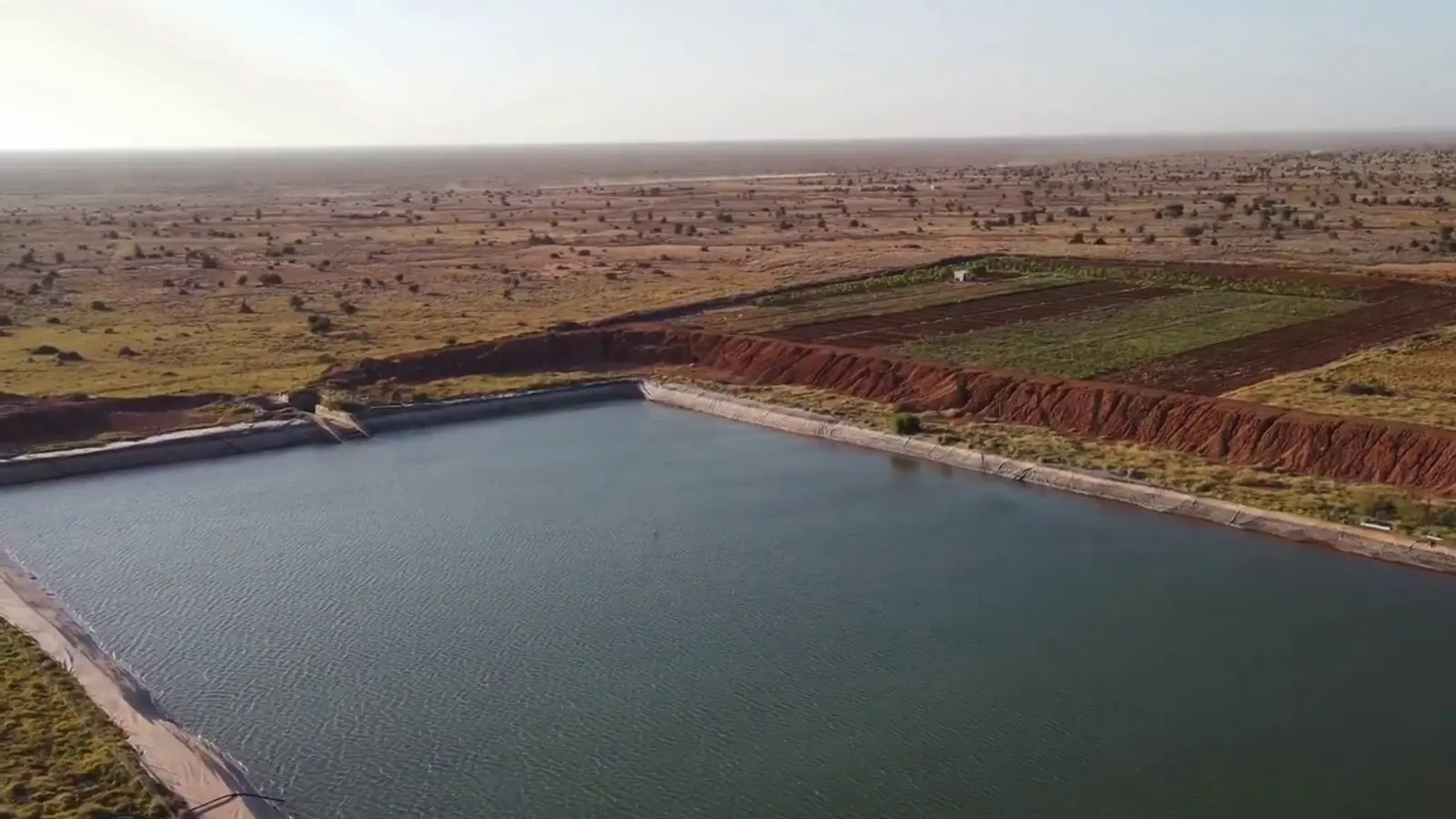
,_water_reservoir.jpg)
In brief
- Somaliland Development Fund reported on 12 October 2022 that it funds a water sustainability study for Hargeisa covering the next 25 years.
- The same report says the study will identify alternative water sources and assess whether existing sources can meet anticipated city demand.
- The reported 6 to 18 million litre per day capacity increase is a production and transmission figure, not verified household delivery.
Contents
Somaliland Development Fund reported on 12 October 2022 that it funds a water sustainability study for Hargeisa. The fund published the item in its commissioning account of the Hargeisa water expansion and improvement programme, whose ceremony took place on 10 October 2022 in Geed Deeble and was officiated by President Muse Bihi Abdi.
What the source records
The Somaliland Development Fund states that the study aims to identify alternative water sources for Hargeisa over the coming 25 years and to assess whether the existing water sources can satisfy the city's anticipated water needs. The same account reports a production and transmission capacity increase from 6 million litres to 18 million litres per day, achieved through borehole rehabilitation and drilling, and notes a further SDF-supported phase of three boreholes and 13 km of pipeline expected to finish in December 2023. Read the Somaliland Development Fund account for the full list.
What it means on site
The study is a planning document, so its value sits upstream of construction: it sets the source options that future well fields, pipelines, reservoirs and pump stations may be designed around. For a client or engineer, the practical link is the water balance. A capacity figure of 18 million litres per day describes what the system can produce and move, not what reaches a kitchen tap. Household delivery depends on pressure, storage, distribution pipework and metering, which the commissioning account does not address. Ask for the study's terms of reference to see its scope and timeframe.
What the source does not establish
The source records the funding of the study, not its findings, and it does not name the consultant, the budget or a completion date beyond the 25-year horizon. The reported capacity is stated as plant performance, not as measured household supply. The December 2023 figure is an expected completion for the three-borehole phase, and it remains a target rather than a delivered result. Nothing in the source states the present condition of the sources, the wells or the pipeline, and the checked date of the page is 20 September 2026.
What to do next
Request the water sustainability study's terms of reference and any interim output from the Hargeisa Water Agency, and ask the agency which department holds the source-option and demand assessment records. That request tells you what the study covers and when its results become usable for design.
Frequently asked questions
Does the sustainability study change what a Hargeisa build can rely on now?
No. The source describes a funded study into future water sources; it reports no completed finding and no change to current supply arrangements. For a specific plot, ask the Hargeisa Water Agency about connection capacity and storage requirements.
What does 18 million litres per day mean for a household connection?
It is the production and transmission capacity the source reports, not a measured household delivery figure. Pressure, storage, distribution pipework and metering all sit between the plant and the tap, and the source does not record them.
Sources
Local reporting: this article is written for building work in Hargeisa and Somaliland. Ground conditions, prices and rules differ between places; confirm the details for your own site.