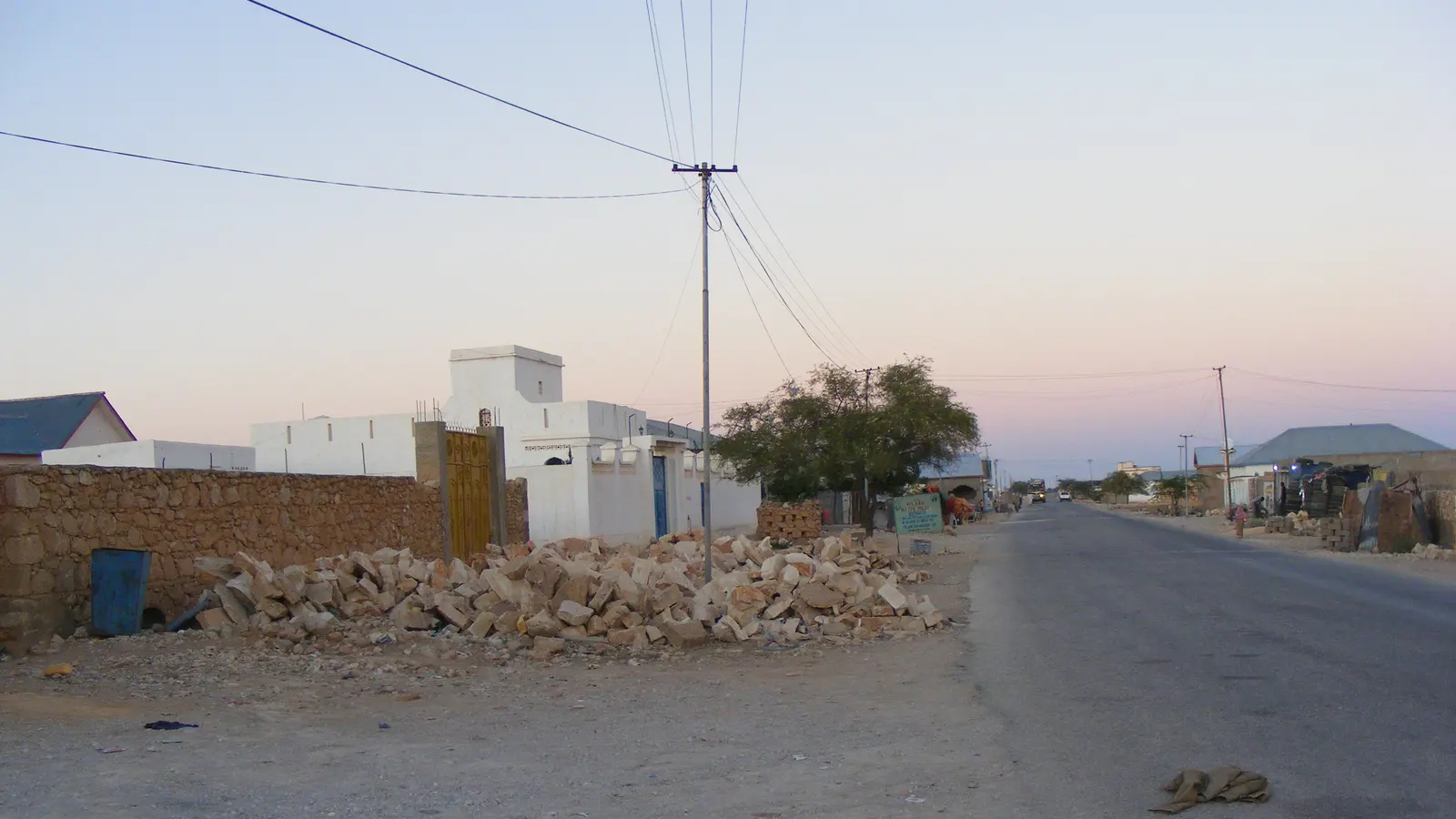

In brief
- The IFRC and Somali Red Crescent final report of 18 December 2020 estimates 750 shelters or houses destroyed by the Qardho floods of 27 April 2020.
- The same report counts 50,000 people affected and 22,000 displaced, with 28,000 suffering partial damage to property and household items.
- The figures are assessment estimates; the report does not assign engineering liability or record how individual buildings failed.
Contents
The IFRC and Somali Red Crescent Society final report of 18 December 2020 estimates that 750 shelters or houses were destroyed when heavy rain on 27 April 2020 flooded Qardho, the regional capital of Karkar in Puntland, and its seasonal river catchments. The report covers the DREF operation MDRSO009, which ran from 27 May to 30 October 2020.
What the source records
The report states that the flooding affected at least 50,000 people, about 8,200 households, in Qardho, and that 22,000 people, about 3,750 households, were displaced from their homes with 750 shelters or houses destroyed. It adds that 28,000 people, roughly 4,600 households, suffered partial damage to property and loss of household items. A further 13,500 people, about 2,214 households or 27 percent of affected households, lost small businesses. The report also notes that the most affected households were settled in high-flood-risk lowlands. Read the final report for the figures as published.
What it means on site
A damage count of this kind is a planning number, not a structural verdict. It separates destroyed from partially damaged buildings, which are different repair problems: a destroyed shelter is rebuilt, a partially damaged one is assessed wall by wall. For anyone rebuilding in Qardho, the report's note that the worst-affected households sat in low-lying ground is the part worth carrying into siting and drainage decisions. Ask the municipal engineer's office or the Qardho branch of the Somali Red Crescent what damage and needs records it holds for the area, and treat any figure as an estimate from April and May 2020.
What the source does not establish
The report does not say why individual buildings failed, whether from water depth, wall material, foundation depth or anything else, and it assigns no liability. It does not give per-house structural detail, replacement costs or repair scopes, and the figures are assessment estimates. The disaster date, 27 April 2020, is the as-of point for the damage picture; the report does not describe the present condition of housing in Qardho. A current structural survey or municipal building record would be needed to confirm today's state.
What to do next
If you are rebuilding or pricing repairs in Qardho, ask the Qardho branch of the Somali Red Crescent, or HADMA, for the assessment records behind the 750 destroyed figure, then have your own plot inspected by an engineer before design.
Frequently asked questions
Is the 750 figure a count of concrete houses or of all shelters?
The report says 750 shelters or houses destroyed, without separating building types, so it covers both. It gives no breakdown by material or construction.
Does the report say what caused the damage to individual houses?
No. It records flooding, displacement and damage totals, and does not assess structural causes or assign liability for any building.
Sources
Local reporting: this article is written for building work in Qardho and Puntland. Ground conditions, prices and rules differ between places; confirm the details for your own site.