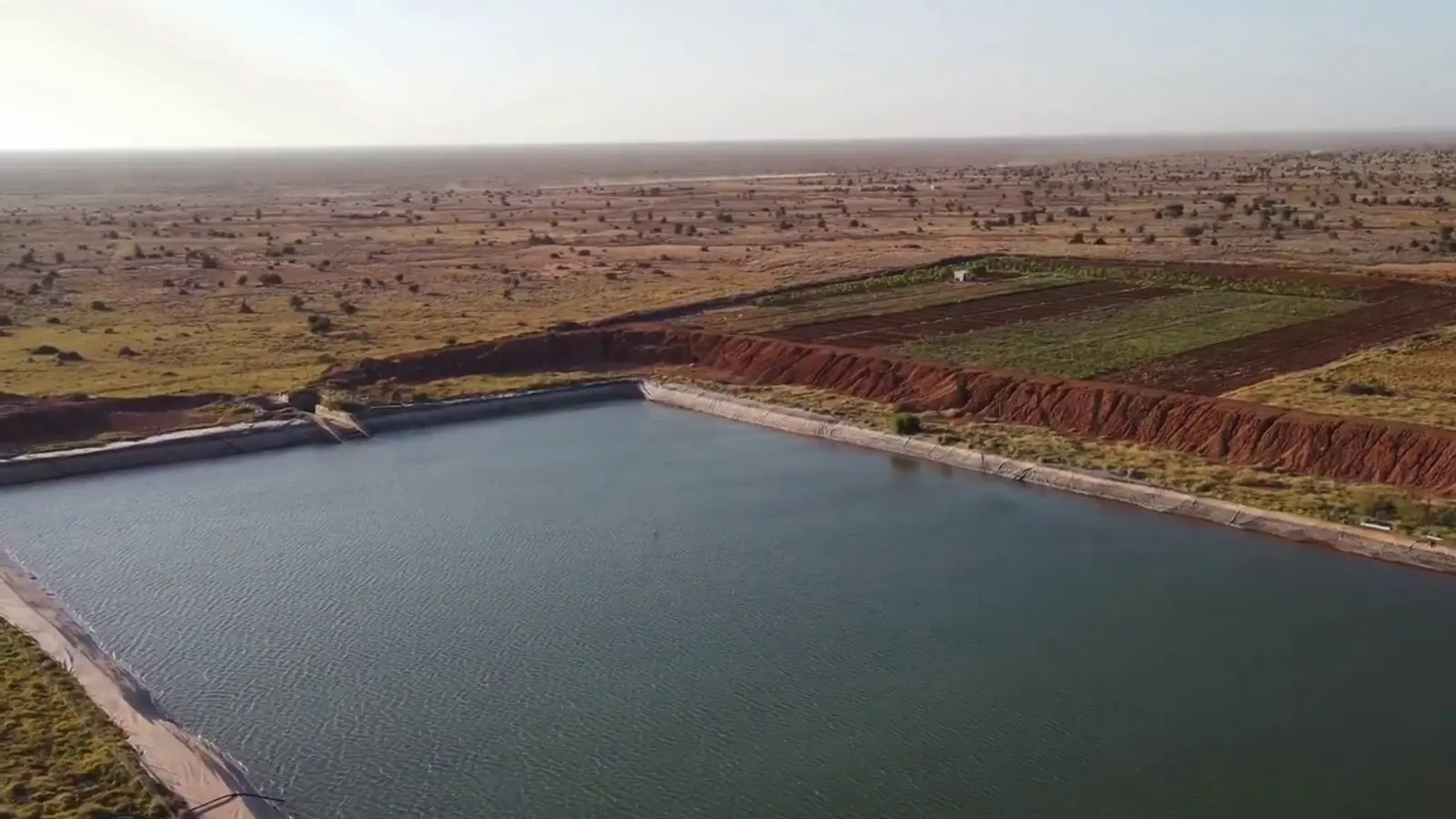
,_water_reservoir.jpg)
In brief
- The World Bank reported on 12 December 2022 that 20 minutes of rain in May 2022, as the Rabaable sand dam was completed, sustained the community until September.
- The same account records 50 completed water points across the Biyoole project, which grew from a 2 million dollar WALP pilot in Puntland and Somaliland.
- The account is a funder's narrative, so it describes what was harvested in 2022 and does not establish the dam's condition now.
Contents
On 12 December 2022 the World Bank reported that the Rabaable sand dam in Puntland was finished just as the May rains arrived, and that 20 minutes of rainfall that month sustained the community until September. The account appears in a Bank blog on the Biyoole project, which grew out of the Water for Agropastoral Livelihoods Project (WALP) pilot in Puntland and Somaliland.
What the source records
The Bank writes that 20 minutes of rainfall in May 2022, as the Rabaable sand dam was completed, carried the community to September. It says people irrigated and cultivated farms, kept livestock, sold dates to nearby towns and supplied water for building an asphalt road into Garowe. The same account reports the World Bank pilot as 2 million dollars launched after research questioned boreholes for rural supply, and the Biyoole project as having completed 50 water points in its first two years.
What it means on site
A sand dam stores water in the sand of a wadi rather than behind a visible pool, and Tesfaye Bekalu of the World Bank describes sand in the source as a cover that shields the water from evaporation. For a builder or client, that means the useful checks sit below the surface: the storage is in the sediment, so abstraction, well placement and silt management decide how long the water lasts. The Rabaable figure is one reported observation for one season, so ask the implementing office for the design storage and monitoring records before treating it as typical of other wadis.
What the source does not establish
The account is a funder's narrative published on 12 December 2022, so its as-of date is late 2022. The May rainfall result is reported as an observation for that season, not a measured yield across years, and the source does not state the dam's storage volume, catchment or spillway details. It does not describe the present condition of the Rabaable dam, and nothing here assigns programme totals to Puntland alone, because the 50 water points cover Puntland and Somaliland together. A current site inspection or the project's monitoring report would confirm what the dam holds today. No cause or fault is stated.
What to do next
Ask the Puntland project implementation unit for the Rabaable dam completion certificate, the as-built drawing and the rainfall and water-level records kept since 2022. Request the same for the water points near your site before planning abstraction.
Frequently asked questions
How much water did the Rabaable sand dam hold after the May 2022 rains?
The World Bank account of 12 December 2022 does not give a volume. It reports only that 20 minutes of rainfall in May 2022, as the dam was completed, sustained the community until September. Ask the project implementation unit for the monitoring records.
Are the 50 completed water points all in Puntland?
No. The World Bank reports 50 water points completed across the Biyoole project, which covers Puntland and Somaliland, so the figure should not be read as a Puntland total.
Sources
Local reporting: this article is written for building work in Somaliland and Puntland. Ground conditions, prices and rules differ between places; confirm the details for your own site.