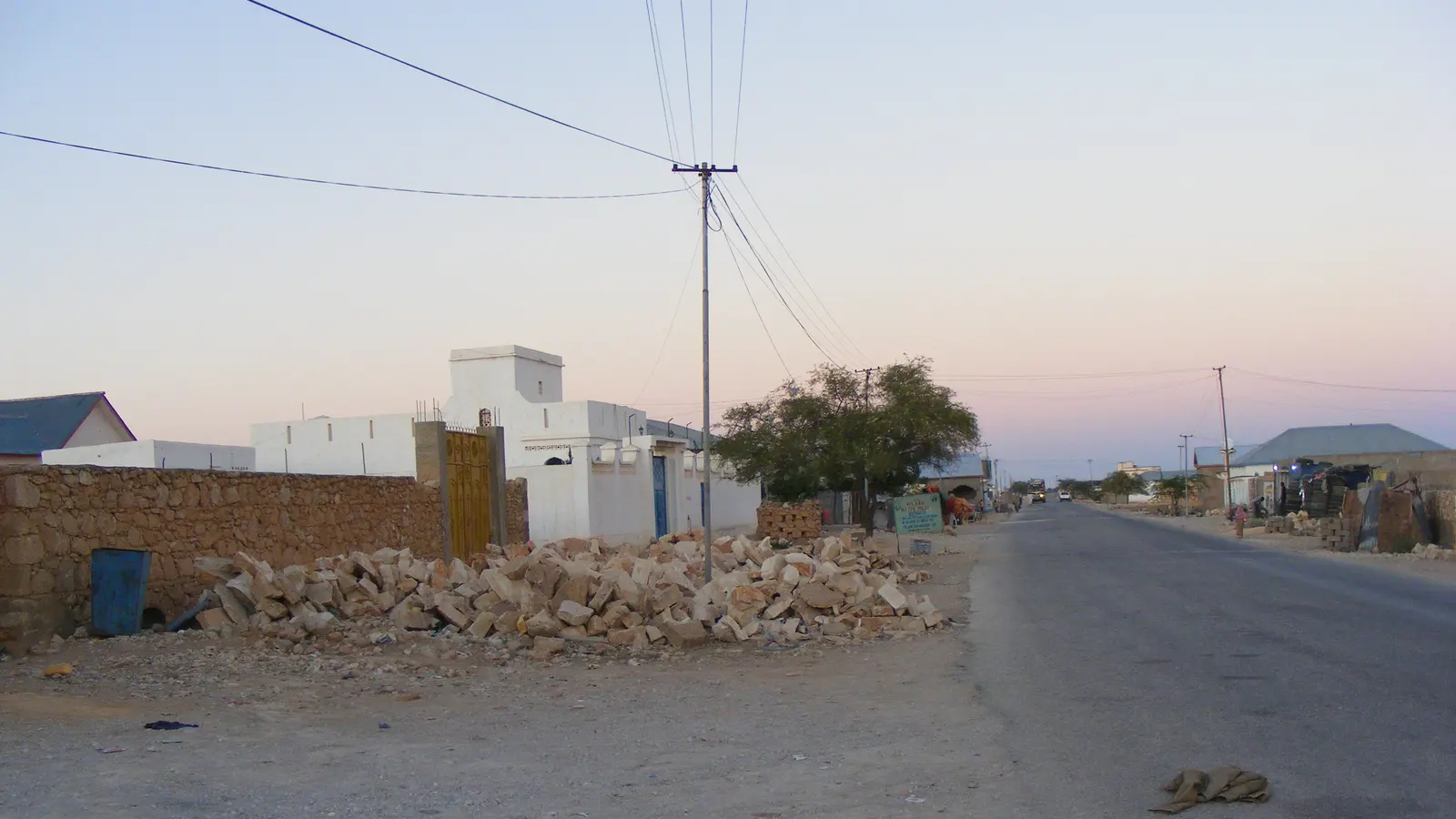

In brief
- Puntland Post reported on 29 April 2020 that Qardho's seasonal watercourse had been built over with houses, schools, parks, business premises and a market.
- The same report warned that allowing affected families and businesses to return to the watercourse area is as dangerous as leaving it clogged with properties.
- The report described the situation up to April 2020 and does not record a municipal planning response, a survey or a relocation decision.
Contents
Puntland Post reported on 29 April 2020 that floods in Qardho caused displacement, loss of life and wealth, and that the Puntland State Government appointed a disaster response committee to assess the damage. The report focused on how the town's seasonal watercourse had been built over and on what returning affected occupants to that same area would mean.
What the source records
Puntland Post wrote that Qardho sits between two watercourses, called tog in Somali, with one bridge carrying rainwater on the Garowe side and a second concrete watercourse, known as buundo jiif, on the Bosaso road. It reported that the watercourse inside the town had become a neighbourhood of houses, schools, parks, business premises and a market, and that these buildings split floodwater into two paths across the district. The report named two contributing factors: permits issued for an area it describes as a natural watercourse, and ten years of low rainfall that had lulled locals into a false sense of security. See Puntland Post.
What it means on site
The mechanism the report describes is obstruction: buildings in a channel force flowing water sideways into streets and neighbouring plots that would otherwise drain through it. For anyone rebuilding or buying in Qardho, that points to questions rather than answers. Ask the municipal engineer's office whether it holds any flood or drainage record for the plot, and whether a survey has been carried out along the watercourse. Where a plot sits near the channel line, a client can ask an engineer to walk the ground after heavy rain and record where water actually ran, then keep that record with the drawings.
What the source does not establish
This is local reporting and commentary, not an engineering audit. It does not give flow rates, channel widths, levels or a hydrological study, and its statements about permits are an allegation about past planning practice, not a finding. It records no municipal response, no relocation decision, no compensation arrangement and no reconstruction standard. The as-of date is 29 April 2020; the report does not describe the present condition of the watercourse, the market or the rebuilt structures, and nothing here should be read as establishing what has happened since.
What to do next
Request the municipal planning record for any plot near the watercourse, and ask the engineer's office for the flood or drainage map covering that channel. If none exists, commission levels and a post-rain flow observation before design, and keep the report with the project file.
Frequently asked questions
Can a builder in Qardho still get a plot checked against the flood channel?
Ask the municipal engineer's office whether it holds a drainage or flood record for the area and where the watercourse line is drawn. If no record exists, have an engineer set levels and observe the channel after heavy rain before designing anything.
Does the Puntland Post report prove that permits were issued in the watercourse?
No. The report makes that allegation about local government planning practice. It is commentary, not an audit, and the source records no municipal response to it. Treat the permit question as one to put in writing to the relevant office.
What evidence would show whether rebuilding in the channel is safe?
A hydrological or drainage study covering the watercourse, with levels and flow estimates, plus the municipal flood map if one exists. The 2020 report provides none of these and stops at describing the built-up channel.
Sources
Local reporting: this article is written for building work in Qardho and Puntland. Ground conditions, prices and rules differ between places; confirm the details for your own site.