
In brief
- A contractor's truss assembly competency shows in dated site records and a supervised trial erection, not in a bid statement.
- Ask for the setting out method, temporary bracing plan, fixing schedule and inspection sign offs before the roof starts.
- Confirm truss spacings, fixings and hold down details against the project specification and the engineer, since general practice varies.
Contents
A roof truss assembly competency claim in Berbera proves nothing on its own. What matters is whether the crew can show a method, a setting out record, a bracing plan and signed inspections for work like yours. Ask for those documents, watch a trial erection, and speak to the supervisor who signed the last roof. Then decide.
What do roof truss assembly competency risks in Berbera mean in practice?
They mean the gap between what a bid promises and what the crew can demonstrate. The check compares the bid's promises with the dated records and trial erection the crew can show, and the required records are confirmed with the engineer. Truss work fails in stages: the trusses arrive, the crew sets them out, lifts them, braces them, fixes them, and then the roof covering goes on. Each stage leaves a record if someone asks for one. A competency check is simply reading those records and watching the work.
Ask the bidder for the last three roof jobs, the truss supplier, the spacing used, the bracing method, and the name of the person who inspected the frame before sheeting. If the answer is a verbal assurance, the risk sits with the client. Corrosion exposure and the correct fixing specification vary from plot to plot, so confirm them with the project engineer before accepting any claim, and read the fixing schedule and material certificates alongside the carpentry.
Who actually sets out and fixes the trusses?
Whoever sets out the trusses sets the roof geometry. If the setting out is done by a different crew from the one that fixes them, errors pass between them. Ask who marks the wall plate, who checks the diagonals, and who signs off the first truss before the rest follow.
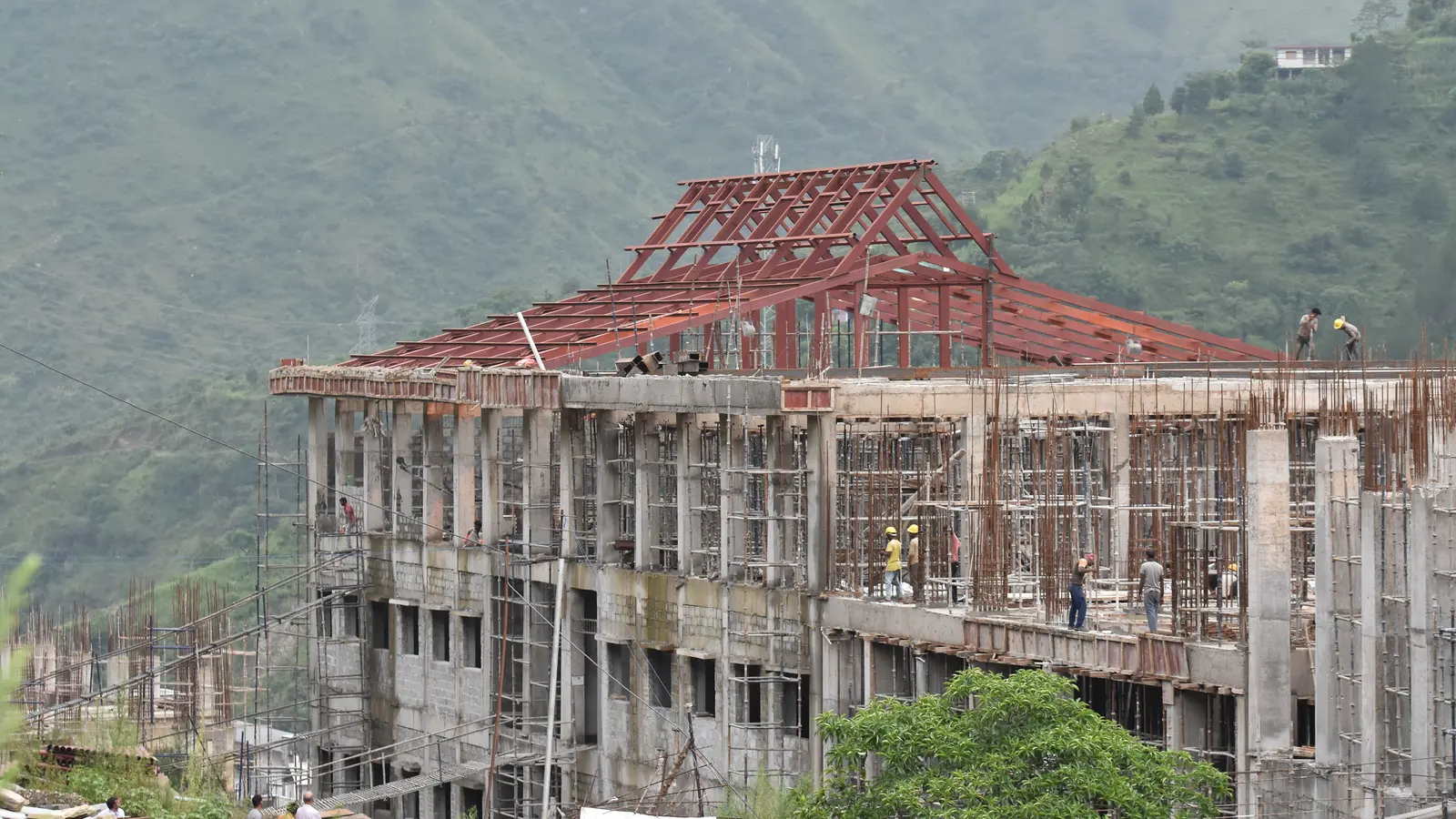
General practice sets the first truss plumb, braces it temporarily, and strings a line along the ridge so every following truss lands on the same plane. Truss spacings, timber grades and fixing types vary by design, so ask the engineer for the approved spacing and fixing schedule rather than relying on a site norm. Ask the engineer to state which fixing material the specification requires for each location, and confirm it against the project specification before ordering. Walk a recent roof the bidder built. Look for even purlin lines, tight joints, no split timber, and bracing that still sits where it was put.
How do you detect unverified capability before the roof starts?
Set the test before the contract, not after. Ask for a written method statement covering lifting, temporary bracing, fixing and removal of temporary works. Request the truss supplier's delivery notes and any treatment certificates. Ask to see the crew's own tools: a spirit level, a string line, a plumb bob, a cordless driver with the right bits, and a torque wrench if bolts are specified.
Then schedule a trial erection of one or two trusses under your supervisor before the full order is lifted. If the crew cannot hold plumb and line on a trial, the full roof will not improve. Ask the local authority directly what records it holds for roofs in the area, but do not treat silence as proof of skill.
What to do next
Write a short pre-roof checklist: setting out method, bracing plan, fixing schedule, inspection points and the name of the supervisor who signs each one. Send it to two or three bidders and ask for a written response with dates and references. Award only to the bidder who answers in writing and agrees to a supervised trial erection.
Frequently asked questions
Can I check a contractor's roof truss work without visiting a site?
Partly. Ask for dated site photographs, delivery notes and inspection sign offs from recent roofs. These show sequence and supervision. They do not show whether the crew can hold plumb and line, so a supervised trial erection remains the strongest check.
What should a roof truss inspection record include?
The date, the truss position, the spacing measured, the bracing fitted, the fixing type used, and the name of the person who checked it. Confirm the required items with the project engineer, since the specification sets them.
Does a low truss assembly bid signal a skills gap?
Not by itself. Compare the bid scope against the method statement, the bracing plan and the fixing schedule. A low bid that omits temporary bracing or inspection time leaves those tasks for someone else to fund and supervise.
Local reporting: this article is written for building work in Berbera and Somaliland. Ground conditions, prices and rules differ between places; confirm the details for your own site.