,_water_reservoir.jpg)
In brief
- The World Bank reported on 12 December 2022 that WALP was piloted in Puntland and Somaliland with an international engineering firm contracted to backstop government implementation.
- The pilot was set up on a belt and braces model, with Trust Fund money paying for on-the-ground support to the client.
- The source describes the pilot as successful and says it grew into the larger Biyoole project, but it does not publish dam drawings, supervision records or completion certificates.
Contents
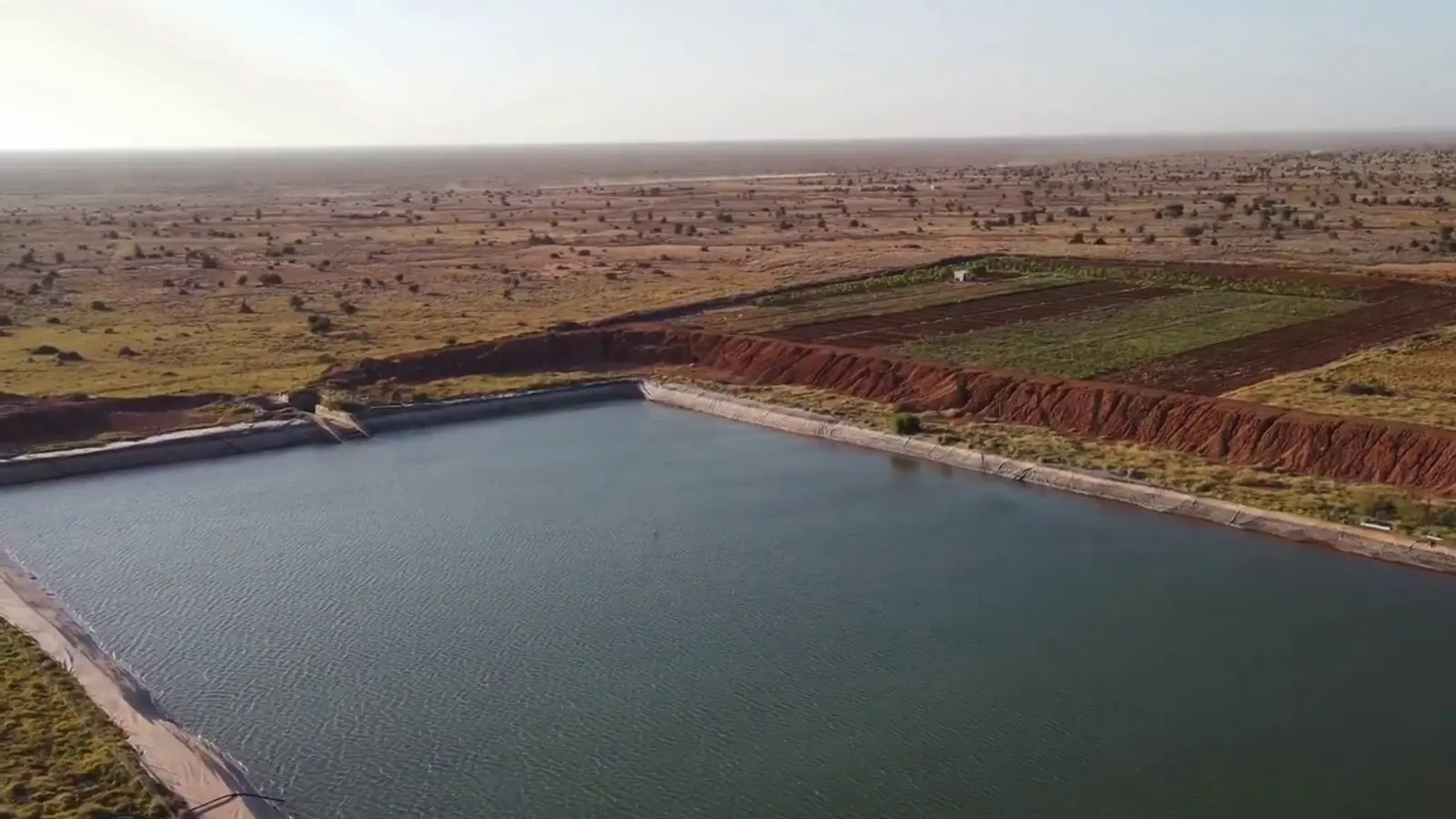
The World Bank reported on 12 December 2022 that it piloted the Water for Agropastoral Livelihoods Project, WALP, in areas of Puntland and Somaliland, and that an international engineering firm was contracted to backstop government implementation of it. The account says the pilot grew into the larger Biyoole project.
What the source records
The World Bank account says analytical work found boreholes were not always a cost effective or reliable way to supply water to people living in rural Somalia, and that storing water in sand rivers, known as wadis, was trialled instead. It gives the pilot budget as $2 million, set up with what it calls a belt and braces approach: the engineering firm provided real-time support on the ground, paid from the Bank's Trust Fund. The account says the Biyoole project completed 50 water points in the past two years and, in Puntland, reports that 20 minutes of rainfall in May 2022, just as the Rabaable sand dam was finished, sustained the community until September.
What it means on site
For a sand dam or subsurface dam, the sand above the stored water acts as a reservoir cover and limits evaporation loss, which is the mechanism the source names through Tesfaye Bekalu, a World Bank senior water supply and sanitation specialist. That is the reason the pilot looked at wadis rather than more boreholes in that setting. A contractor or engineer pricing similar work can take from this that sand thickness and riverbed material govern how much water sits in storage, so ask which office holds the as-built sections and test pit logs for the Rabaable dam before treating any figure as typical. Confirm design parameters against the project specification.
What the source does not establish
The account is a funder's retrospective, not a set of drawings or certificates. It does not publish dam dimensions, storage volumes, supervision arrangements or verification that Rabaable was built to a stated standard beyond the general statement that contractors were checked against World Bank Environmental and Social Framework regulations. The World Bank reports the rainfall episode as an observation from May 2022, not as a rainfall record. Treat the 50 water points and the budget figures as programme reporting that this article does not assign to Puntland alone.
What to do next
Ask which office holds the Rabaable sand dam as-built drawings, test pit logs and the project Operations and Management Guidelines, and which office holds the construction supervision records. Check the state of the dam against those records rather than this account.
Frequently asked questions
What did the World Bank say the engineering firm did on WALP?
The 12 December 2022 account says an international engineering firm was contracted to backstop implementation of the $2 million pilot, providing the client with real-time support on the ground using money from the World Bank's Trust Fund.
Why store water in sand instead of drilling boreholes?
The source says analytical research found boreholes were not always a cost effective or reliable solution for rural water supply, and that sand dams mitigate evapotranspiration because the sand covers the stored water. It also notes concern that communities might not accept water they cannot see.
Does the source confirm the Rabaable dam is working today?
No. It reports that the dam was finished and that 20 minutes of rainfall in May 2022 sustained the community until September, as an observation rather than a rainfall record. The account gives no later condition and publishes no as-built records.
Sources
Local reporting: this article is written for building work in Somaliland and Puntland. Ground conditions, prices and rules differ between places; confirm the details for your own site.