_(46898318062).jpg)
In brief
- Wall alignment competency risks in Berbera sit with the client when a contractor's claimed skill is never checked against a plumb line, a line and pins, or a recent wall.
- A short site test on a sample wall panel shows whether the gang can hold line, level and plumb before the main walls start.
- Put the check in the contract as an inspection point, so the work is measured before the finishes cover it.
Contents
Wall alignment competency risks in Berbera start with a claim and end in a crooked wall. When a contractor says the gang has built aligned blockwork before, that statement is not evidence. The client carries the risk if no one checks it before the walls rise. Alignment is easy to see and easy to test, and both checks cost less than breaking out finished plaster.
What goes wrong when wall alignment is only a claim?
A wall can be out of plumb, out of line, or out of level, and each fault shows up at a different stage. Plumb drifts when the mason does not check the face with a spirit level as the course rises. Line drifts when the corner is set wrong and the string follows it. Level drifts when the bed joint thickness changes across the wall. In a hot, dry climate, blocks can dry fast and the mortar can stiffen before the mason corrects the course, so the error sets hard.
The faults surface later. A wall that leans shows as uneven plaster thickness, and a plasterer may pack it out with more mortar. Door and window frames will not sit square. Tiles follow the wall, so a leaning wall pulls the tile line out. Confirm the permitted tolerance in the project specification before you rely on it, and ask whichever local authority has jurisdiction over the plot what inspection requirements apply to your plot. General practice measures plumb and line against a stated tolerance over a storey height, but the specification is the document that counts.
How do you check wall alignment competency before work starts?
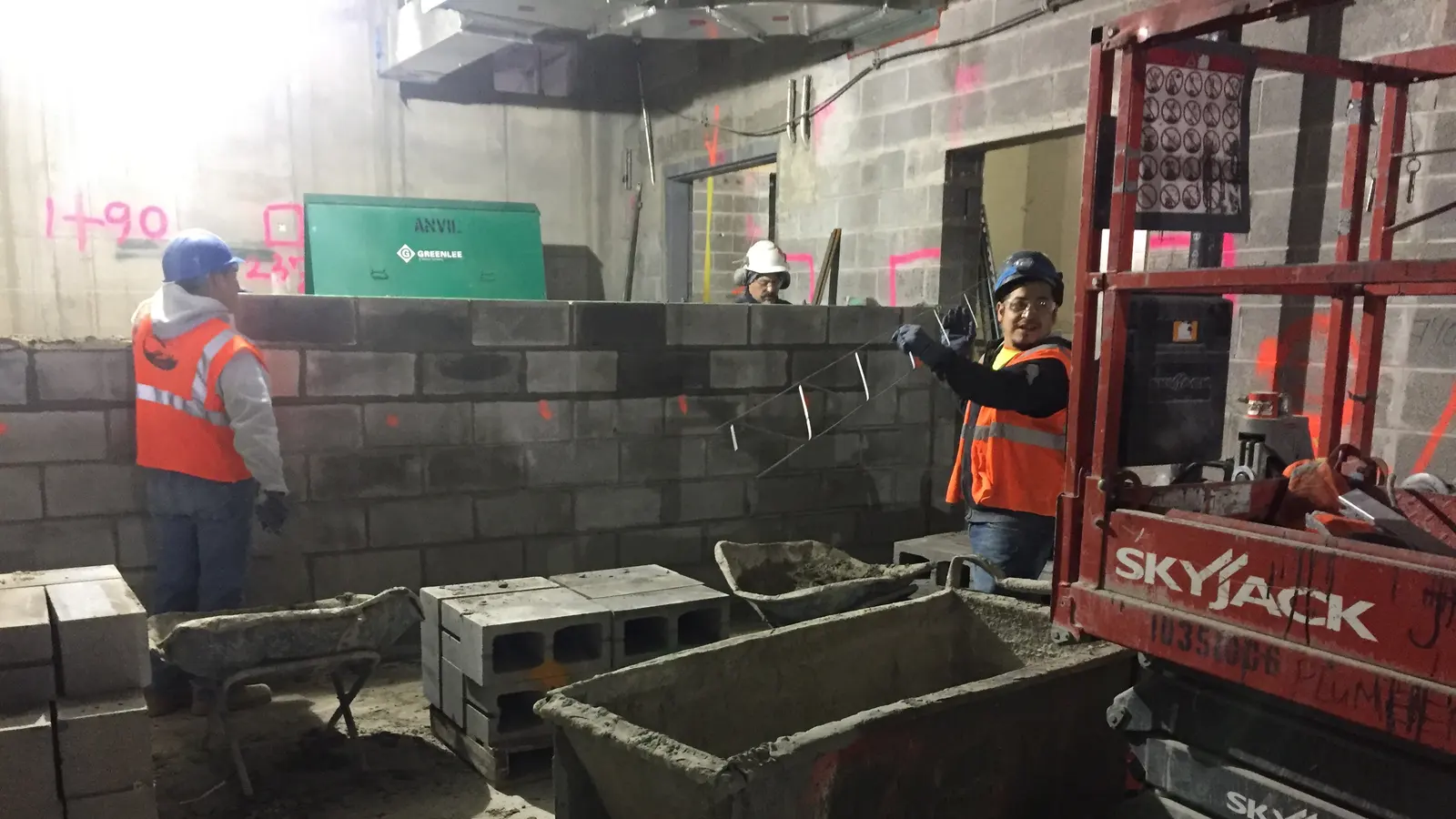
Set a small sample panel and watch the gang build it. A panel of a few courses, one corner and one straight run gives you more evidence than a reference list. Check the corner blocks first: the first course sets the line for everything above it. Use a plumb line or spirit level on the face and the end, and a tight string along the run. If the panel fails, the same mistake will repeat across the building.
Ask three questions and ask for records. Which recent wall did the gang build, and can you walk it? Who set the corners on that job? What does the gang use to check plumb, line, level and course height? Then walk a recent site and look at the walls with your own eyes. Ask the supervisor how they correct a course that has already set. A gang that checks as it builds will answer with tools and steps, not with confidence.
How do you carry the check through the build?
Agree the hold points before the first block is laid. A hold point is a stage where work stops for inspection, and it belongs in the contract so the site manager knows what to expect. Ask for a plumb and line check at each lift height, and again before plaster, cladding or tiling starts. Record each check with the date, the location, the tool used and the person who signed it.
Expose the work when you check it. Do not let plaster hide a leaning wall, because the repair cost rises once finishes are on. If the contract allows a variation for remedial work, ask for the scope and the method in writing before anyone starts. Check what your contract says about who pays for rework, and never withhold payment on your own reading of the clause. If the same gang keeps failing the plumb check, the check itself tells you where the supervision needs to sit.
What to do next
Name one wall in your build, set a sample panel, and check it with a plumb line and a string before the main walls start. Write the result, the date and who signed it into your site file. If the panel fails, correct the method before the next course, and ask the contractor to show the tools the gang will use on the main walls.
Frequently asked questions
Can a contractor's completed walls be checked after the build?
Yes, but finishes hide the evidence. A plumb line on an exposed face or a straightedge on a plastered wall can show deviation, while door and window reveals show square. Checking before plaster is cheaper and clearer.
Local reporting: this article is written for building work in Berbera and Somaliland. Ground conditions, prices and rules differ between places; confirm the details for your own site.