In brief
- In Somaliland's dry inland, a reliable well depends more on correct siting and casing than on drilling depth.
- The most reliable wells sit in fractured basement rock or alluvial channels, not in open plains.
- Get itemised quotes (survey, drilling per meter, casing, pump, development, apron) rather than a lump sum; costs vary widely with depth, casing and pump type.
- Check the permit requirement with the Ministry of Water Resources Development before drilling; do not assume private land is exempt.
- Without proper sanitary sealing and regular maintenance, a new well can fail within two years.
Contents
- Where should you actually drill a well in Somaliland's dry inland?
- What drilling method works best for your site and budget?
- Which materials and casing design keep the well from collapsing?
- What permits and regulations apply to well drilling in Somaliland?
- How do you maintain a well so it lasts in the Gu and Deyr climate?
- How do you get a well cost you can trust?
- What to do next
Somaliland's dry inland gets only a few hundred millimetres of rain a year, and less in drought years. That rain arrives in two short bursts, the Gu from April to June and the Deyr from September to November. The rest of the year, surface water disappears. A reliable well stores water underground and lets you draw it when the land above is dust. If you build it right, it lasts twenty years or more. If you guess at the siting and skip the casing, it fails in the first dry season. This article walks through the practical decisions: where to drill, which drilling method fits your site, what materials to specify, how to get a cost you can trust, and how to keep the well working.
Where should you actually drill a well in Somaliland's dry inland?
You drill where groundwater collects in fractures, faults, or alluvial channels, not in the middle of a flat plain. In Somaliland's dry inland, the productive aquifers sit in two main settings. The first is fractured basement rock, common around Hargeisa and Burao, where water moves through cracks in granite and gneiss. The second is alluvial sand and gravel along seasonal riverbeds, called wadis, which hold shallow water that recharges quickly after rain. A hydrogeologist or experienced driller reads the landscape for these features: dry riverbeds with deep sand, lineaments visible on satellite images, and vegetation that stays green longer than the surrounding bush. Villages often know where traditional hand-dug wells or springs once worked, and that knowledge is usually correct. Government hydrogeological maps from the Ministry of Water Resources, where available, show known boreholes and water quality.
Siting mistakes are expensive. A hole drilled 100 meters from a productive fracture can come up dry. Before you commit to a rig, pay for a hydrogeological survey: it costs a small fraction of a dry borehole.
What drilling method works best for your site and budget?
The drilling method follows the geology. For shallow alluvial wells in wadis, a hand auger or small percussion rig can reach water at 10 to 20 meters. For deeper fractured rock, you need a rotary air hammer or a mud rotary rig, which can drill 50 to 150 meters. In Somaliland, most contractors use truck-mounted rotary rigs with air hammers for hard rock. A mud rotary rig handles unconsolidated sand and clay better but costs more per meter because it needs water and mud. Percussion cable-tool rigs still work in some areas but are slow.
A local driller will charge per meter, and the rate moves with rig type, depth, location and fuel. This article quotes no figures, because none could be sourced; ask two drillers for a written rate per meter and a total for a stated depth and casing, and check what the total excludes (land compensation, permits and pump maintenance are commonly left out).
Which materials and casing design keep the well from collapsing?
The casing holds the hole open and keeps sand out, so specify it correctly. In Somaliland's dry inland, most wells use uPVC casing because it resists corrosion and costs less than steel. For a 6-inch hole, use 4-inch uPVC with a wall thickness of at least 3.2 mm (Schedule 40 equivalent). For deeper wells or areas with shifting ground, use 5-inch or 6-inch casing. The screen section, where water enters, should be factory-slotted uPVC with slot sizes matched to the aquifer material. A gravel pack around the screen, usually 2 to 5 mm washed gravel, keeps fine sand from clogging the pump.
The sanitary seal matters as much as the screen. The top 5 to 10 meters of the annular space between casing and borehole wall must be sealed with cement grout or bentonite clay. This stops surface water, animal waste, and dirty runoff from running down the outside of the casing into your water. Without a seal, a well in a wadi can go from clear to contaminated after the first rain.
For the pump, choose a hand pump for village use or a solar submersible for larger demand. An India Mark II hand pump is commonly planned to serve a few hundred people; a solar submersible system with panels, a controller and a storage tank serves larger demand. Solar pumping suits remote sites where diesel delivery is expensive and unreliable.
What permits and regulations apply to well drilling in Somaliland?
Check the permit requirement with the Ministry of Water Resources Development before drilling, and do not assume private land is exempt. Boreholes on public land and inside town limits generally need approval, the municipality may also have a say in urban areas, and rural wells on community land may go through the district water committee and the ministry's regional office.
A permit protects you from disputes and from being shut down. If you drill without one, a neighboring well owner who claims your pumping lowered their water table has the stronger position. Ask the regional office what the application needs (a site map and a drilling plan are typical) and what the fee is; this article does not quote one.
How do you maintain a well so it lasts in the Gu and Deyr climate?
The Gu and Deyr rains are your maintenance calendar. Before the Gu rains start in April, check the wellhead, the pump, and the drainage around the apron. Rainwater that pools around the casing will find any crack in the sanitary seal. After the rains, test the water for turbidity and, if possible, for bacteria. A simple field test for pH and turbidity costs little; ask a private laboratory in Hargeisa what a microbial test costs before you need one.
Every year, pull the pump and measure the water level and the depth of the well. If the static water level drops more than a meter per year, you are over-pumping or the recharge is failing, and you need to reduce use or find another source. Desilting the bottom of the well, if sand has accumulated, requires a contractor with a bailer or air lift; get a quote for the depth of your well.
Keep a logbook. Record pumping hours, water level, and any repairs. That log tells you when the pump is wearing out and when the yield is declining. A well without records is a well you cannot manage.
How do you get a well cost you can trust?
No sourced price list for wells in Somaliland is available to this publication, so the useful move is to make every quote itemised and comparable. A complete quote for a hand-pump or solar-pumped well separates the survey, drilling per meter to a stated depth, casing and screen by size and material, gravel pack and sanitary seal, development and test pumping, the pump and any tank, the apron and drainage, and training for the users. Add a contingency line, because drilling can hit unexpected fractures or lost circulation zones, and agree in writing what happens if the hole has to go deeper than planned.
Running costs follow the pump type. Hand pumps need a small annual repair and spare-parts fund. Solar pumps need panel cleaning, controller checks and an eventual pump replacement. Diesel pumps cost the most to run because of fuel, which is why solar suits remote sites. Ask the contractor for the spares list and the expected pump life for the model they propose, and put the answer in the contract.
What to do next
Pick up the phone and call two drilling contractors and one hydrogeologist. Ask each contractor for three recent well logs in your district, with yield figures and casing details. Ask the hydrogeologist for a site visit before you sign anything. Walk the proposed site yourself during the dry season and look for green vegetation lines, dry riverbed sand, and any signs of old wells. Then go to the Ministry of Water Resources regional office and ask for the permit checklist. Do not pay a deposit to a driller until you have the survey report and a written quote that separates drilling, casing, pump, and development costs. That sequence keeps you from spending money on a hole in the ground that never becomes a well.
Frequently asked questions
How deep do you need to drill for water in Somaliland's inland areas?
Depth varies by location. In alluvial wadis, water can be 10 to 20 meters down. In fractured basement rock around Hargeisa and Burao, productive fractures often sit 40 to 100 meters deep. A hydrogeological survey and test drilling determine the right depth for your site.
Can I use a hand pump instead of a solar pump?
Yes, if the water table is within about 40 meters and the demand is for a village or small community. Hand pumps cost less and need no fuel, but they serve fewer people and require more human effort. Solar pumps suit larger demand and deeper wells.
What is the biggest reason new wells fail in Somaliland?
Bad siting and poor sanitary sealing. A well drilled in the wrong place comes up dry or yields too little. A well without a proper cement or bentonite seal around the top casing lets contaminated surface water in during the rains, and the water becomes unsafe.
Do I need a permit to drill a well on my own land in Somaliland?
Ask before you drill. Boreholes on public land and inside towns generally need approval from the Ministry of Water Resources Development, and municipal approval may also apply in urban areas; whether private rural land is exempt is a question for the regional ministry office, not an assumption to make.
How much does a well cost in Somaliland in 2024?
No sourced price list is available, and costs depend on depth, casing material, pump type and distance from the nearest road. Ask two drillers for itemised written quotes for a stated depth and pump, and compare them line by line.
Local reporting: this article is written for building work in Somaliland. Ground conditions, prices and rules differ between places; confirm the details for your own site.
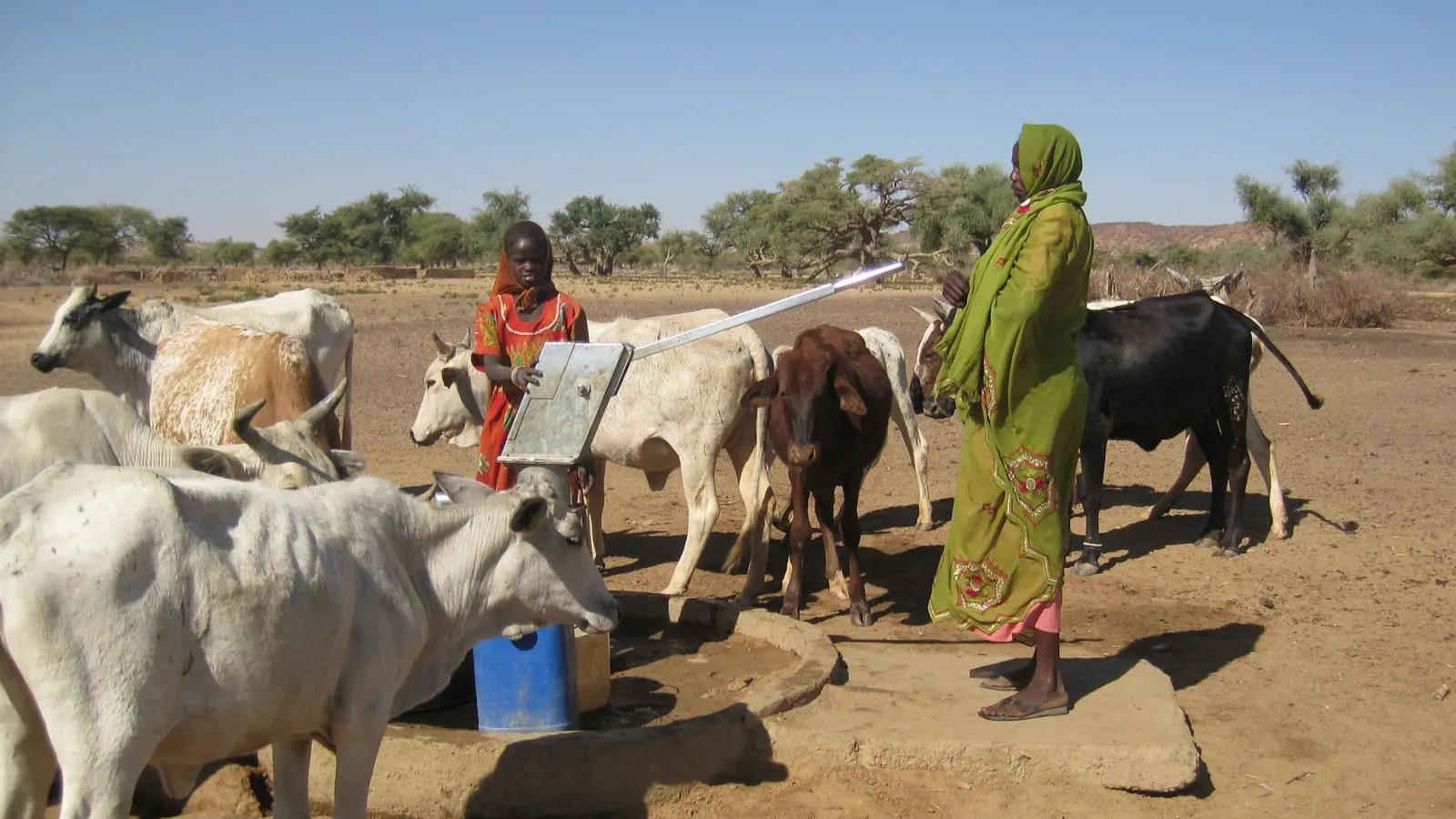
Photo: COSV, CC BY-SA 3.0, via Wikimedia Commons
