(065).jpg)
In brief
- The World Bank's 12 December 2022 account states that prior analytical research showed boreholes were not always a cost-effective or reliable rural water solution.
- The Water for Agropastoral Livelihoods Project piloted sand dams and subsurface dams in dry riverbeds, and the World Bank reported the pilot succeeded and grew into larger projects.
- The account reports that 50 water points were completed, and that 20 minutes of rainfall in May 2022 sustained the Rabaable community until September.
Contents
On 12 December 2022, the World Bank published an account of the Biyoole project, its water programme in Somalia, which explains why the Water for Agropastoral Livelihoods Project (WALP) was first piloted in Puntland and Somaliland. The Bank states that analytical research showed boreholes were not always a cost-effective or reliable solution for supplying water to people living in rural Somalia.
What the source records
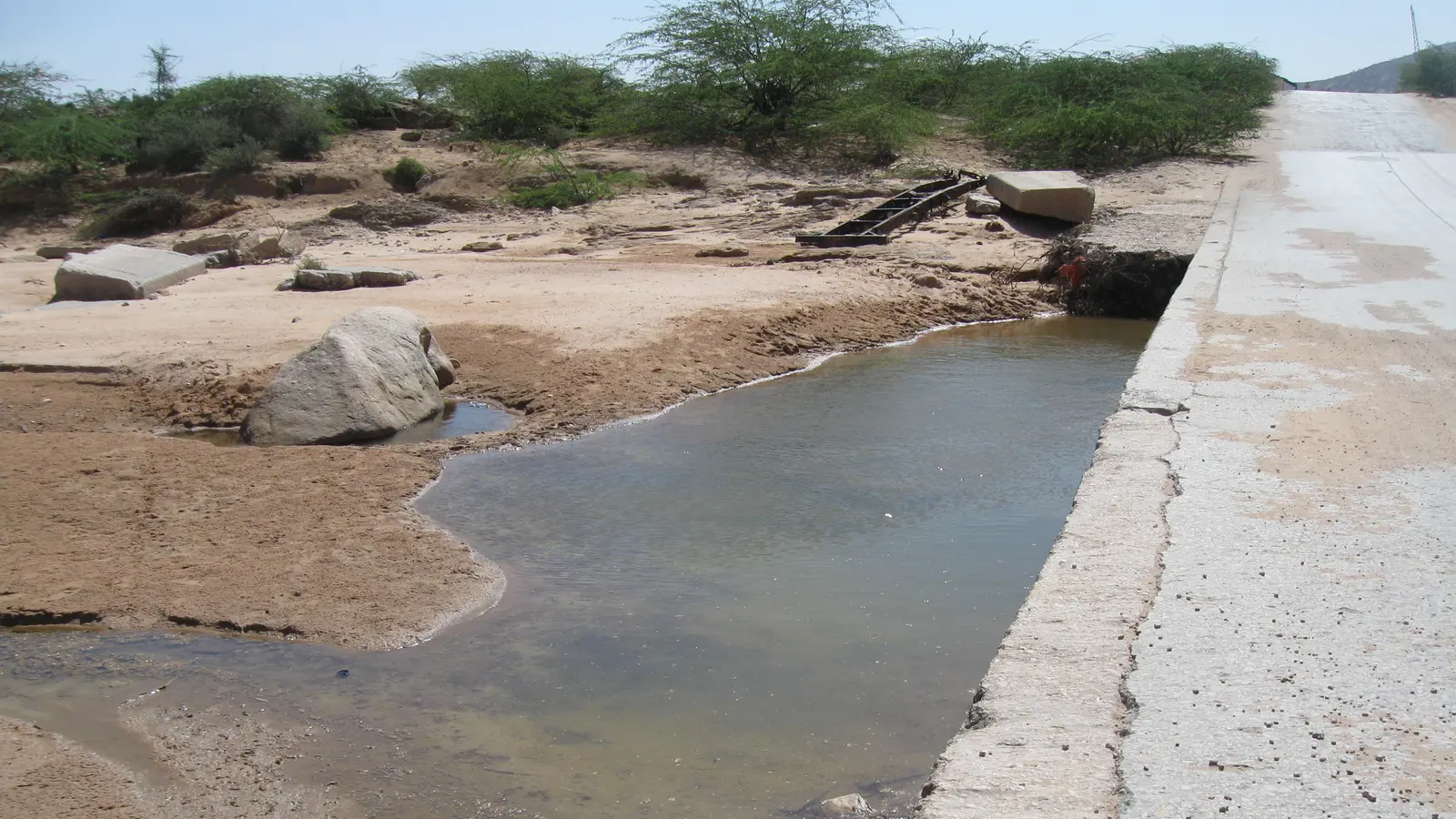
The World Bank writes that, after that research, it decided to test whether building sand dams or subsurface dams in dry riverbeds in Somaliland and Puntland was feasible, and whether projects could be run through government systems alone. The $2 million pilot grew into the $42 million Biyoole project and then the $70 million Barwaaqo project, the Bank says. It reports 50 water points completed, and that at Rabaable in Puntland, 20 minutes of rainfall in May, just as the sand dam was finished, sustained the community until September. See World Bank.
What it means on site
Sand dams and subsurface dams store water inside the sand of a wadi rather than in an open tank, and the Bank quotes its Senior Water Supply and Sanitation Specialist, Tesfaye Bekalu, saying the sand acts as a reservoir cover that protects the water underneath from evaporating. For a rural water scheme, that mechanism can change what a client asks for: an engineer or implementing agency may need to design around a dry riverbed and its sand, not only a drilled hole. The Bank also reports that communities may question dams where the water cannot be seen, so a project can be expected to explain the storage before construction.
What the source does not establish
This is a funder's account dated 12 December 2022, and it reports the pilot and Rabaable rainfall as observations, not measurements. It does not give borehole failure rates, sand dam yields, or a comparison of costs with boreholes. It does not assign programme-wide totals to Puntland; the 50 water points are for the programme as a whole, covering areas of Somalia, not one region. It does not describe the condition of the Rabaable dam today, and no figure here should be read as current.
What to do next
For a sand dam, subsurface dam or borehole decision in Somaliland or Puntland, ask the relevant project implementation unit which prior studies or groundwater records exist for the wadi or site, and request any operations and management guidance issued for that water point.
Sources
Local reporting: this article is written for building work in Somaliland and Puntland. Ground conditions, prices and rules differ between places; confirm the details for your own site.