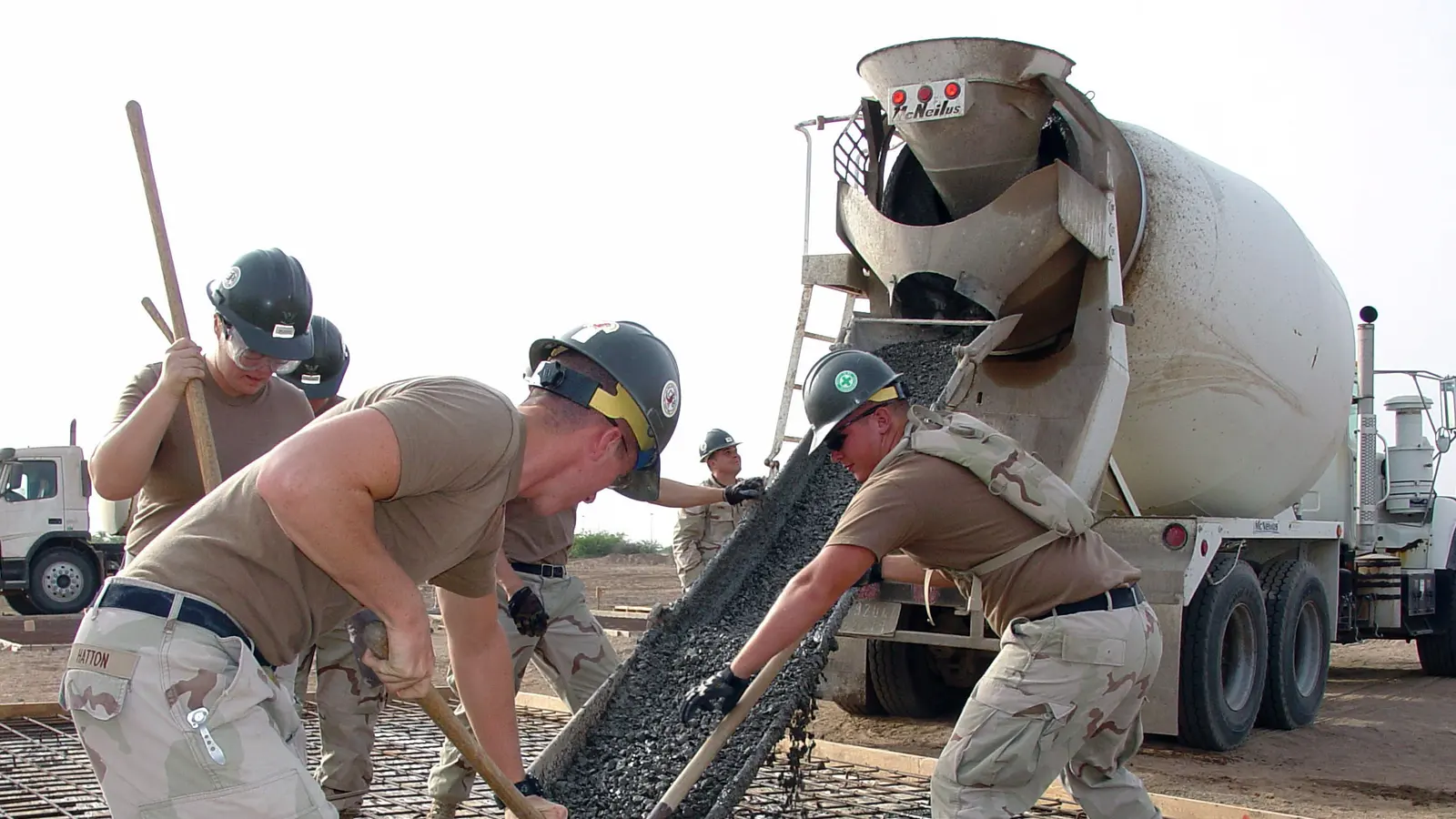
_133_pour_concrete_into_a_concrete_pad_located_inside_the_expansion_area_of_Camp_Lemonnier.jpg)
In brief
- A curing course certificate records attendance, not whether the worker can keep a slab wet through a hot, windy afternoon.
- Early surface cracking shows up within hours to days, so inspect the work while it is still curing rather than at handover.
- Ask the supervisor for the curing method, the start time and who checks it at the end of each day.
Contents
Concrete curing training gaps in Burao show up as cracks, not as paperwork. A worker can hold a certificate from a short course and still leave a slab to dry in the afternoon wind because nobody taught the practical habit of covering and re-wetting. The certificate records attendance. The slab records what the worker actually does. This gap matters most on small and medium building jobs where one supervisor covers several sites.
Why does curing knowledge fail to reach the site?
Curing is learned by doing it through a full day, not by hearing about it once. Classroom sessions can explain that concrete needs moisture to gain strength, but the habit of returning to a slab at midday and again before sunset is a work routine, not a fact. Where training ends at the door of the classroom, the worker may know the word and still not own the practice. Ask the training provider what practical assessment it runs: does each trainee cover, wet and check a real pour under supervision, and is that signed off? If the answer is a written test only, treat the certificate as a record of attendance. On site, ask the supervisor how a new worker is shown the curing routine during their first week, and who signs that off.
How does the gap turn into early surface cracking?
Early surface cracking happens when the top few millimetres of concrete lose water faster than the rest of the pour. In hot, dry and windy conditions the surface can dry while the concrete below is still plastic, and the shrinkage difference pulls it apart. General practice is to start curing as soon as the surface can take it without damage, keep it continuously moist, and shield it from wind and direct sun. Common methods include wet covers, plastic sheeting and repeated wetting; the right choice and duration belong in the project specification, so confirm them with the engineer. A worker who has never watched a slab through a full hot afternoon may wet it once in the morning and consider the job done. The crack that follows is thin, map-like and easy to miss under dust.
How do you detect the gap before handover?
Detect it by inspecting while the concrete is still curing, not after the formwork is struck and the defects are hidden. Walk the recent pour in the first two days and look for a dry, light-coloured surface, plastic sheeting blown aside, or wet covers that have not been moved since the morning. Note the time of your visit and ask when the slab was last wetted. Request the curing record if the contract requires one, and check that entries match the weather on those days. For a completed slab, ask the engineer to assess crack width and depth before any repair is agreed. Where a contractor's curing method is unclear, ask for it in writing before the next pour, and check what the contract says about method statements and inspection points.
What to do next
Before the next pour in Burao, agree the curing method, the start time and the person who checks it each day. Put it in the pour plan and sign it with the supervisor. Then visit the slab on the first afternoon and again the next morning. If the surface is dry or the cover has moved, raise it with the contractor in writing while the concrete is still curing.
Frequently asked questions
Does a curing certificate prove a worker can cure concrete?
Not on its own. A certificate usually records attendance at a course. Ask the provider whether trainees were assessed on a real pour, covering, wetting and checking it under supervision, and ask the site supervisor how that skill is checked in the first week of work.
How soon can early surface cracking appear?
It can appear within hours to a few days of the pour, while the concrete is still curing and the surface is losing water. That is why the slab should be inspected during curing, not only at handover.
Local reporting: this article is written for building work in Burao and Somaliland. Ground conditions, prices and rules differ between places; confirm the details for your own site.