
In brief
- A low truss assembly bid can mean tasks were left out of the price rather than done faster.
- Ask for a priced line for every truss task, including lifting, temporary bracing, holding-down fixings and cut-end treatment.
- Compare the bid against the approved truss drawing, not against the other bids.
Contents
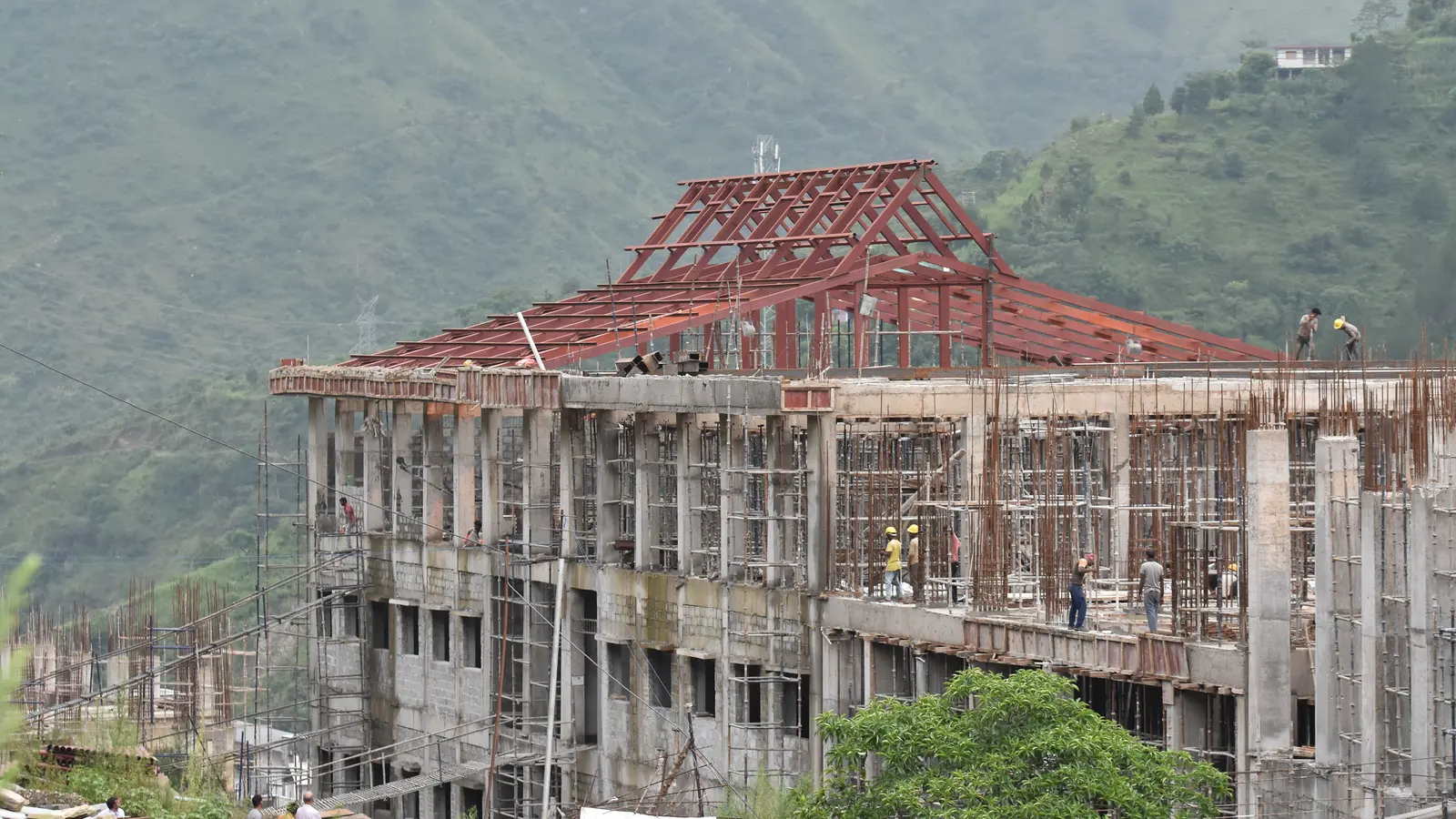
A low roof truss assembly bid in Garowe can mean tasks were left out of the price rather than done faster. Truss work carries several costs a hurried estimate can drop: lifting gear, temporary bracing, holding-down fixings, and treatment of cut ends. The total looks attractive until those items reappear as variations or never get done at all.
What does a low roof truss assembly bid leave out in Garowe?
It leaves out the tasks that are awkward to measure, so the priced scope shrinks while the physical work does not. A truss set has to be lifted onto the wall plate, stood, braced, aligned, fixed down and made weathertight before the roof covering goes on. An estimate built quickly from a span and a truss count often prices only supply and erection, then treats the rest as site overhead. Check the bill against the approved truss drawing and ask which line covers each operation. If lifting, temporary bracing or fixings sit in no line at all, the gap is in the pricing, not in the work. Ask the supplier or fabricator for written delivery and lifting arrangements, and ask the estimator to state which gang and which equipment the rate assumes.
How do unrealistic tender allowances make roof frames unstable?
When the allowance for labour, bracing or fixings is too thin, the crew cuts the step that holds the frame true. Bracing is the obvious casualty. A truss stands on its own only once it is braced and fixed; before that it relies on temporary restraints, and general practice is to brace and fix each truss as it is placed rather than after the run is up. Cut-end treatment is the second casualty: sawn timber exposed at a cut loses its protection, which matters at the bearing and at any site-cut member. Confirm treatment requirements, durability for the project location and fixing spacings against the project specification or the engineer, since these are general practices and not local rules. A client or supervisor can also walk a recent roof by the same crew and look at bracing lines, fixing pattern and cut ends before awarding.
How do you check a low truss bid before you award it?
You check the priced scope line by line, then check that the bidder has the equipment and the crew the rate assumes. Ask for a breakdown that separates supply, delivery, lifting, erection, temporary bracing, permanent bracing, holding-down fixings, purlins and cut-end treatment. A low bid may leave out lifting, bracing, fixings or treatment, so read each line rather than the total. Ask whether scaffolding or a crane is included, or whether the bidder expects the main contractor to provide it. Ask the local approving authority what drawings and approvals it expects for the roof structure. Where a rate looks far below the others, ask the bidder to write down the method, gang size and days assumed, then compare that against the programme. A bid that cannot describe its own method is the one to test hardest.
What to do next
Ask each bidder to reissue the truss assembly price as a line-by-line schedule using one written scope, with a method statement for lifting and bracing. Set a clarification meeting, walk one roof the bidder has built, and record the answers in the tender file. Award on the priced scope, not on the lowest total.
Frequently asked questions
What is the biggest omission in a low roof truss bid in Garowe?
Low bids commonly leave out temporary bracing and holding-down fixings, because they are hard to measure from a truss count. Lifting equipment and cut-end treatment also drop out. Check each line of the priced scope against the truss drawing.
Can a client check truss work without an engineer?
A client can check that bracing, fixings and cut-end treatment are on the priced scope and visible on site. For spacings, member sizes and treatment, ask the project engineer or the specification.
Local reporting: this article is written for building work in Garowe and Puntland. Ground conditions, prices and rules differ between places; confirm the details for your own site.