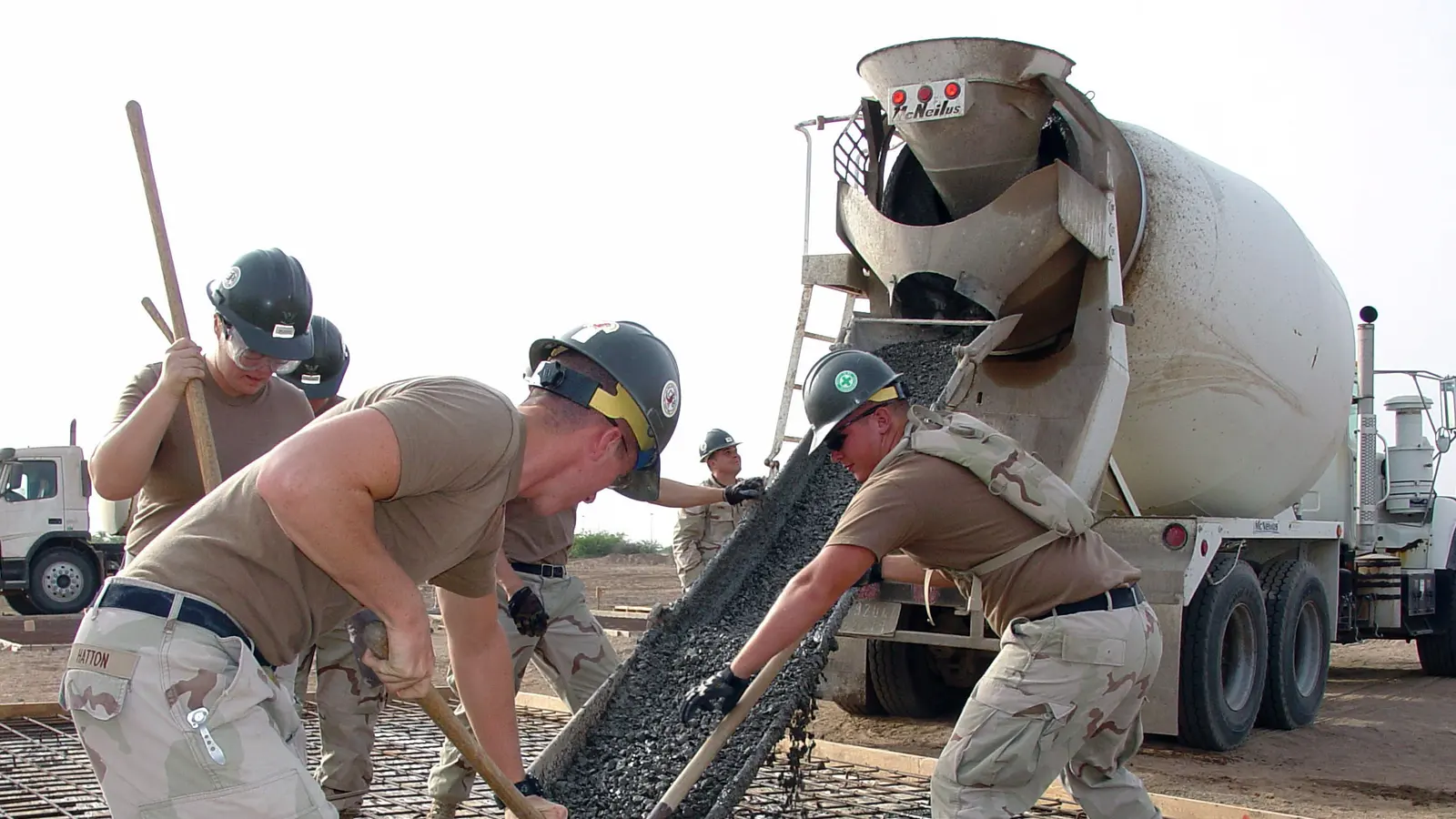
_133_pour_concrete_into_a_concrete_pad_located_inside_the_expansion_area_of_Camp_Lemonnier.jpg)
In brief
- Hot weather concreting supervision gaps in Qardho show up as rapid moisture loss, early cracking and concrete that fails cube tests, and each of those traces back to a check nobody recorded.
- Fix the checks before the pour: shade the materials, cool the mix water by agreed means, place early, cure immediately, and write down times, batch details, added water and cube references.
- Make one named person sign the pour record and require the cube results; a signature with no test result proves nothing.
Contents
Hot weather concreting in Qardho can fail even when the crew is capable, because rapid moisture loss and missed inspections hide the problem until the concrete has set. The pour looks normal at the time and the defects appear days later. The mechanism, not the town, is the risk: sun, dry air and wind pull water out of fresh concrete faster than it can cure.
What does weak supervision miss on a hot pour?
It misses the checks that only matter within minutes of mixing and placing. Concrete gains strength through hydration, and hydration needs water inside the mix. In hot, dry, windy conditions the surface can dry faster than bleed water rises, so the top layer sets while the concrete below is still workable. That is plastic shrinkage, and it shows as short random cracks, often within hours.
A supervisor who is not standing at the pour at the right moment will not see the signs: a crust forming on the surface, a mix stiffening in the chute, extra water going into the drum to keep it workable. None of it is visible in a photo taken afterwards. To judge supervision on a Qardho site, ask for the pour record for a recent slab or column, with times for batching, arrival, placement and the start of curing. If the answer is a verbal "it was fine", there is no evidence either way. Treat a missing record as a gap to close, not proof of bad work.
How do you detect the damage afterwards?
Visual inspection catches some of it, and testing catches what the eye cannot. Look for map cracking on a slab surface, a dusty or friable top, and edges that crumble when rubbed. Tap suspect areas for hollow sounds. None of these is conclusive on its own.
The reliable check is testing, tied back to the pour. Ask to see the cube results for the concrete in question. Laboratories in Puntland can crush cubes, so ask a laboratory directly what it tests, what it needs, and how it labels samples. During the pour, cubes should be taken from the batch, labelled with date, element and batch reference, and cured before testing. If the client cannot link a test result to the concrete in the wall, testing has not closed the loop. For an existing build, a core test may answer the structural question; ask the engineer to specify it. Confirm all methods and acceptance limits against the project specification or engineer.
Ask the municipal engineer's office what records it holds for the plot, such as approvals or inspection notes. That tells you what has already been documented.
How do you close hot weather concreting supervision gaps in Qardho?
Agree the checks and the records before the pour, then make one named person answerable for each. The general practices below are not Qardho regulations; confirm them against the project specification or engineer.
- Shade and dampen aggregates, and keep cement off hot ground.
- Cool the mix water by an agreed method, such as ice or chilled water, with the mix design adjusted for it.
- Place early in the day where the programme allows, and plan the pour size against how fast the crew can finish, compact and cover it.
- Start curing as soon as the surface can take it, and keep it wet. Confirm the duration and method with the engineer.
- Keep admixtures and retarders under the engineer's specification, not a site improvisation.
- Record batch time, arrival time, placement time, curing start, water added and cube reference.
For a client or project manager, walk a recent pour with the supervisor and ask the same questions. Written records either exist or they do not.
What to do next
For your next pour in Qardho, write a one-page pour plan before the day: who supervises, the placement window, the cooling method, the curing start and the cube schedule. Give a copy to the supervisor and the laboratory. After the pour, file the record with the cube results against the element it belongs to.
Frequently asked questions
Why does concrete crack in hot weather even when the mix is correct?
The surface can dry faster than bleed water arrives, so the top shrinks while the concrete below is still plastic. That is plastic shrinkage cracking, and it depends on sun, wind, humidity and placement timing as much as on the mix.
What should a client ask for after a concrete pour in Qardho?
Ask for the pour record with times for batching, placement and curing start, the water added on site, and the cube test results labelled to the same element. Ask the engineer how the results compare with the specification.
Local reporting: this article is written for building work in Qardho and Puntland. Ground conditions, prices and rules differ between places; confirm the details for your own site.