In brief
- Somaliland has no licensed clerk-of-works profession and no mandatory third-party site inspection, so quality control on most builds falls to whoever is already on site.
- Owners commonly act as their own contractor and inspector at the same time, which removes the independent check that catches mixing errors, thin cover, and skipped curing.
- A foreman's authority on a Hargeisa site is informal and can be overridden by the owner or a paying relative at any point, so technical decisions follow money rather than engineering judgment.
- The defects that show up later in Hargeisa buildings, such as cracking walls, leaking roofs, and rebar exposure, are typically traceable to a step nobody was independently checking during construction.
- Hiring an independent supervising engineer for periodic site visits costs a small fraction of total build cost and is the single change most likely to prevent expensive rework.
Contents
- Why doesn't Somaliland have an independent clerk-of-works system?
- Who fills the supervision gap in practice?
- What does unsupervised construction actually produce?
- Why doesn't a foreman's authority solve the problem?
- What does an independent site check actually cost?
- What should an owner put in writing before building starts?
- What to do next
On a typical Hargeisa build, nobody with independent authority checks the work. The person watching the site is usually the owner, a trusted relative, or a foreman the owner pays directly, none of whom can stop work without risking their own job or family relationship. Somaliland has no licensing body that certifies clerks of works, no mandatory building inspection regime tied to permits, and no standard contract clause requiring a third-party engineer to sign off on structural stages before the next one starts. The result is that quality control depends entirely on who happens to be present and how much technical judgment that person has, which varies enormously from one plot to the next.
Why doesn't Somaliland have an independent clerk-of-works system?
There is no building code or licensing framework that requires one. A 2020 review of Somaliland's construction practices, published in the PM World Journal by Fashina, Sheikh, Fakunle and Opiti, found that the territory has no formal building codes and that most owners act as their own general contractor and consultant when building homes or commercial property. Without a code, there is nothing that legally obliges a project to have an inspector, and without a licensing body, there is no professional class of clerks of works to hire even if an owner wanted one. Municipal permitting in Hargeisa controls land use and plot boundaries more than it controls construction quality, so a permit approval is not a signal that anyone checked the rebar spacing or the concrete mix.
Who fills the supervision gap in practice?
Three types of people typically fill the gap, and none of them has the independence the role requires. The owner supervises directly, visiting the site daily or weekly and making calls on materials and workmanship based on whatever construction knowledge they picked up informally, often from prior builds or from family members in the diaspora who have seen other countries' sites. A relative, sometimes one with a background in a related trade, gets asked to keep an eye on things as a favor, which gives them informal standing but no contractual power to reject work or withhold payment. A foreman hired from the labor crew runs day-to-day decisions on the mix ratio, block-laying, and curing schedule, but answers to the owner or the paying relative and can be overruled the moment a disagreement costs time or money. In each case the person checking the work has a personal or financial stake in not slowing the job down, which is the opposite of what independent inspection is supposed to provide.
What does unsupervised construction actually produce?
Unsupervised construction produces defects that trace back to a specific stage nobody independently checked, not to one dramatic failure. Common patterns on Hargeisa builds include concrete poured with a mix ratio eyeballed by the crew rather than measured, curing cut short because the crew wants to move to the next stage, reinforcement bar placed with cover thinner than needed because nobody measured it before the pour, and block walls raised out of plumb because the foreman didn't stop to check with a level. None of these show up immediately. They surface months or years later as hairline cracking across a wall, a roof slab that leaks at the first Gu rains, or rebar visible at a corner where cover was too thin and the concrete has started to spall. The PM World Journal review linked the absence of government site inspection directly to structural failures and building collapses in Somaliland, and noted that safety standards end up resting entirely on whatever the owner and contractor decide to sustain themselves, with no external check on that decision.
Why doesn't a foreman's authority solve the problem?
A foreman's authority solves the labor-management problem but not the quality problem, because it isn't backed by any contract or professional standing that survives a disagreement with the person paying him. A qualified clerk of works elsewhere can reject a concrete pour, order a wall demolished, or halt work until a defect is corrected, because that authority is written into the contract between the owner and the contractor and doesn't depend on the foreman's personal relationship with anyone on site. In Hargeisa, a foreman who insists on redoing a bad pour risks being replaced by someone more agreeable, especially on a small residential job where the owner is covering costs directly and wants to keep the project moving. This is not a character flaw specific to any one foreman; it is what happens when the person doing the checking reports to the person paying for the work, with no independent party in between.
What does an independent site check actually cost?
Hiring an independent engineer for periodic site visits costs far less than the rework a missed defect creates. Somaliland does not have a standard published fee schedule, but engineers working independently on residential projects in Hargeisa typically charge per visit or a modest percentage of contract value for periodic supervision, rather than the daily rate a full-time clerk of works would command on a larger commercial job. For a family home, four to six visits at key stages, foundation excavation, rebar placement before each pour, concrete pour itself, and roof slab, is usually enough to catch the errors that cause long-term problems. Compare that to the cost of breaking out and re-pouring a slab, or repairing a wall with exposed, corroding rebar, and the independent check is the cheaper option even before accounting for the risk to occupant safety. Get a written quote in US dollars, since local currency invoicing in Somaliland shillings is common for labor but engineers quoting technical services often price in dollars to avoid exchange-rate exposure.
What should an owner put in writing before building starts?
An owner should put inspection rights and stage sign-offs into a written agreement before the first block is laid, because verbal understanding gives nobody the standing to stop bad work. The Fashina et al. review specifically flagged the lack of written contracts between owners and contractors as a reason the government has no legal basis to intervene when a builder does substandard work; the same logic applies between an owner and any inspector they hire. A short written agreement naming who has authority to reject work, at which stages they inspect, and what happens if a defect is found gives the arrangement teeth it wouldn't otherwise have. This doesn't require a lawyer or a long document, but it does require the owner to decide in advance, on paper, that quality checks matter enough to slow the project down when something is wrong.
What to do next
If you're planning a build in Hargeisa, decide before construction starts who has independent authority to reject work, and put it in writing. Contact a civil engineer directly, agree a fixed schedule of site visits tied to construction stages rather than a vague ongoing arrangement, and give them explicit written authority to halt a pour or reject a course of blockwork if it doesn't meet the standard you agreed. Budget for this from the start of the project rather than treating it as an optional extra once the foundation is already down, since the stages most worth checking, footing depth, rebar cover, and concrete curing, happen early and can't be inspected retroactively once covered.
Frequently asked questions
Can I act as my own clerk of works if I'm the owner?
You can watch the site yourself, but you can't provide the independence the role is meant to give, since you have a direct financial interest in the job finishing on time and on budget. If you want a real check, pair your own daily presence with periodic visits from an engineer who has no stake in the schedule.
Does getting a building permit in Hargeisa mean the construction will be inspected?
No. A permit in Hargeisa generally confirms land use and plot boundaries rather than construction quality, and there is no standard follow-up inspection tied to the permit that checks rebar, concrete mix, or curing practice. Any quality check has to be arranged separately and privately.
How do I find an independent engineer in Hargeisa for periodic site visits?
Ask other builders or diaspora contacts who have completed projects recently for names of engineers they hired independently of their contractor, since there's no public licensing directory to search. Confirm the engineer has no business relationship with your contractor before hiring them, so the check stays independent.
What's the minimum number of site visits worth paying for on a small house?
At minimum, get an independent check at excavation and footing, at rebar placement before each major pour, and before the roof slab is poured. These are the stages where a mistake gets covered up by the next layer of work and becomes expensive or impossible to fix later.
Sources
Local reporting: this article is written for building work in Hargeisa and Somaliland. Ground conditions, prices and rules differ between places; confirm the details for your own site.
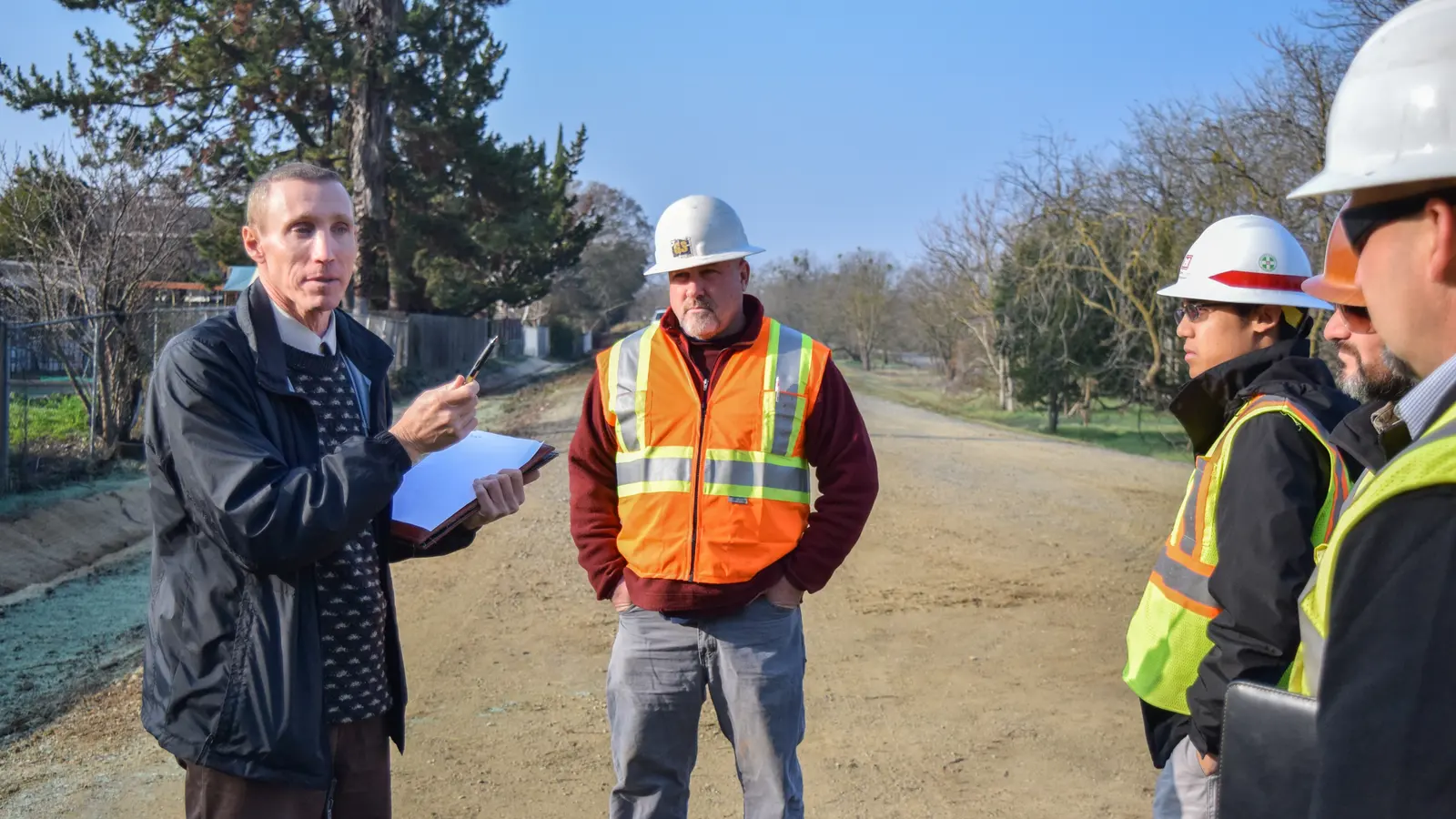
Photo: U.S. Army Corps of Engineers Sacramento District, Public domain, via Wikimedia Commons
