In brief
- An apprenticeship needs a named supervisor, a written task list and a signed log, or nobody can tell whether the trainee is learning.
- Check progress by watching the apprentice do the task and recording pass or fail against the drawing or specification, not by asking how it is going.
- Keep the log, sign-off sheets and diary together so a client, engineer or future employer can see who supervised what.
Contents
An apprenticeship is working when a named person signs off each task after watching the apprentice do it. Without that, training on a Puntland site runs on goodwill and memory. Set three things at the start: who supervises, which tasks the apprentice will learn, and what evidence proves each one. Then check the evidence every week.
Who is responsible for the apprentice each day?
One named supervisor answers for the apprentice each working day, and the site diary records that name. Not the whole crew, not whoever is free. The apprentice stays with that person's gang, and the supervisor reports progress to the site engineer.
Agree the arrangement in writing before work starts. The apprentice, the supervisor and the employer each sign a short sheet listing the tasks, the tools involved and the safety rules. When the supervisor is away, name a replacement for that day and write it in the diary. An apprentice who drifts between gangs learns watching, not doing.
Check that the supervisor can actually teach the task. A skilled mason is not automatically a teacher. Ask the supervisor to explain, in front of the apprentice, how the mortar ratio and the gauge line are set. If the explanation is muddled, the trainee will copy errors rather than method. The people and skills section covers the wider workforce picture. For hiring checks on the supervisor himself, use the steps in How do you check a foreman's skills before hiring in Puntland?.
What evidence shows the apprentice is learning?
A signed task log shows it: date, task, who observed, and whether the work met the drawing or specification. Progress is what the apprentice can do unaided, witnessed. Hours on site prove attendance, not skill.
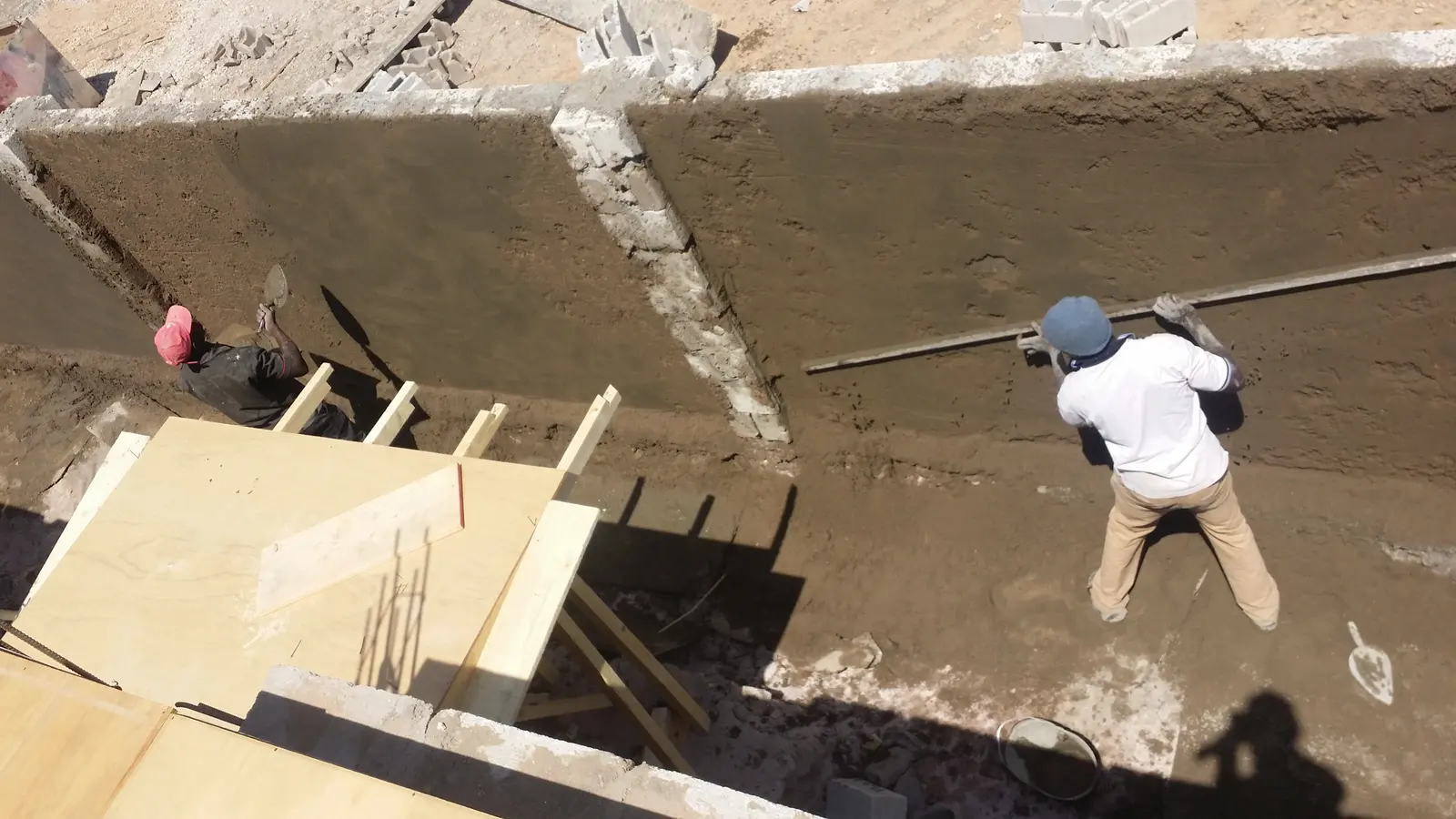
Build the log around real tasks. Setting out a block wall to line and level. Mixing to a stated ratio. Cutting and fixing reinforcement to the bar schedule. Reading a dimension off the drawing and marking it. Each entry needs the supervisor's signature and a short note on what went wrong and what was corrected.
Run a short observed check each week. Give the apprentice a task already taught, watch without helping, and mark pass or fail against the drawing. Record failures openly; a failed check is useful information and a place to reteach. Keep the drawing on the wall where the work happens so the apprentice practises reading it, not just copying the supervisor's marks.
How do you keep progress visible to the client and engineer?
The log, the sign-off sheets and the site diary stay together in one file the engineer can read at any visit. When the client asks what the trainee has learned, the answer is a page of signed entries, not a conversation.
The site diary carries the supervisor's name for each day and the tasks observed. The log carries the detail. Hold a short review with the apprentice and supervisor every few weeks, read the log together, and set the next tasks. Note what the supervisor needs too: a gauging box, a steel tape, a level the gang can use. Training stalls when the tools for checking are missing.
At the end of the placement, write a short summary of tasks completed, the checks passed and the areas still weak. Give a copy to the apprentice. It becomes the reference a future employer or training provider can use. For the diary format itself, see How do you write a site diary that proves who supervised the work in Puntland?. The education page lists routes for further training.
What to do next
Before the next apprentice starts, write a one-page sheet naming the supervisor, listing five tasks the apprentice will learn and stating how each will be checked and signed. Have all three parties sign it, file it with the site diary, and review it at the end of the first month.
Frequently asked questions
Does an apprentice need a written agreement on a Puntland site?
It is not a legal requirement you can assume, so ask the employer and, where relevant, the training provider what paperwork they require. A short signed sheet naming the supervisor, the tasks and the checks protects everyone and gives the apprentice a record to show later.
How long should an apprenticeship last?
Length depends on the trade, the apprentice's starting level and how much supervised work the site can offer. Set a review date rather than a fixed end, and extend it if the signed log shows tasks not yet passed.
Sources
Local reporting: this article is written for building work in Puntland. Ground conditions, prices and rules differ between places; confirm the details for your own site.
Photo: Mrgaid143, CC BY-SA 4.0, via Wikimedia Commons
