.jpg)
In brief
- A certificate records hours attended; it does not record whether the worker performed the task once under the same supervision the site gives.
- Training transfer gaps show as slow set-out, repeated rework and workers waiting for instruction, not as missing paperwork.
- Close the gap by requiring a witnessed demonstration on the project's own work and writing it into the programme, not by adding another classroom day.
Contents
A classroom certificate proves someone sat through a session. It does not prove they can set out a wall, strike a level line or cure concrete on a Burao site. Training transfer gaps appear when a worker learned a method in a room but has never performed it with the tools, materials and supervision the project actually runs.
How do training transfer gaps show up on site?
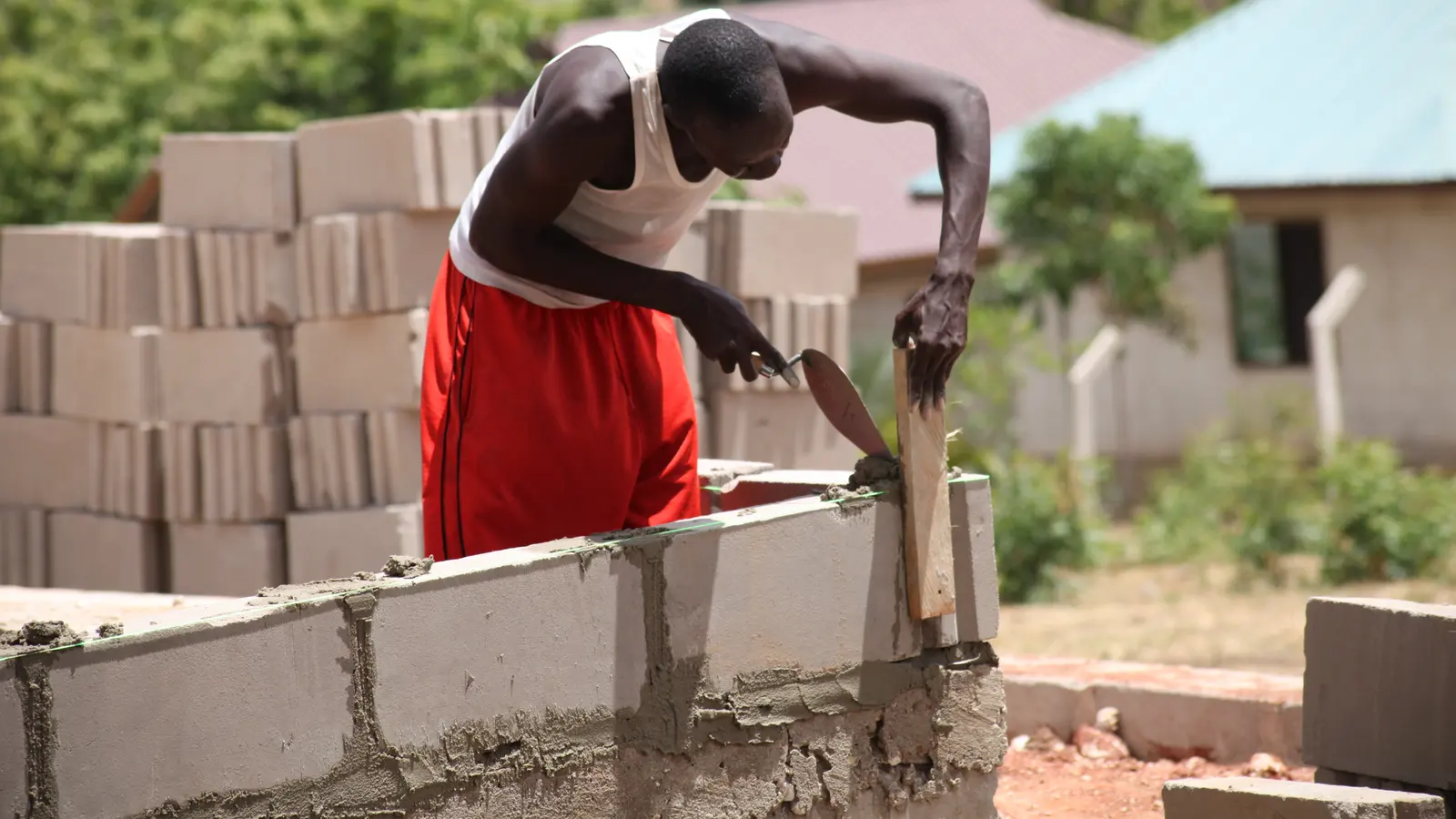
They show as hesitation and rework, not as missing certificates. Ask a worker to set out a corner and watch whether they check a diagonal, establish a datum and mark the line before the first block goes down. If they wait for the foreman to place the first pin, the classroom session has not transferred. Other signals include a helper standing idle while the mason re-measures the same line, mixing that drifts because nobody records the water added, and a supervisor correcting the same detail every morning across several days. The Burao materials market and dry inland climate shape the details a worker must handle: dust on a setting-out line, fast evaporation from fresh concrete, and shade or water that may not be where the drawings assume it is. Walk a recent job and look at what got reworked. Rework follows the gap.
What causes the gap between classroom skills and site work?
Mostly the difference between the training setting and the site setting. A session runs with clean tools, one instructor to a small group and no programme pressure. A Burao building site runs with a deadline, a materials delivery that may arrive late and one supervisor covering several crews. A person who can set out a line in a compound may not hold that method when the first truck arrives. Transfer is also weak when the trainer has never worked the trade, when the assessment rewards a written answer over a physical one, and when nobody tells the learner which task they will be trusted to do alone. Supervision norms matter too: where the foreman usually places the line himself, the learner never gets the turn that builds the skill. Ask the training provider how many candidates performed the task unaided, and ask the supervisor which tasks each worker may now start without help.
How do you close a training transfer gap?
Move the test onto the work, not into another classroom. Pick the two or three tasks the job depends on, and have the trainer witness the learner doing one of them on the project itself, under the same supervision the site will give. Record what was done, on which element, on which date, and who witnessed it. Put that demonstration in the programme as a hold point, so the crew cannot move to the next stage until the skill is shown. Build the turn into the day: let the learner set out while the foreman checks, then let them set out while the foreman is elsewhere on site and checks on return. General practice is to repeat a new skill several times within the first weeks, but confirm the sequence with the project engineer or the provider. For more than one trade, ask the municipal engineer's office or the training provider whether any local records of assessment exist for the plot or the programme. Do not accept a certificate as the evidence. Accept a witnessed task.
What to do next
Pick one task your crew will repeat this month. Tell the supervisor to let one worker perform it alone, check it afterwards and write down what needed correcting. Bring the provider to that check. If the worker cannot do it unaided, the training has not transferred, and the next step is the demonstration on site, not another session.
Frequently asked questions
How can a contractor tell if a trainee can work unsupervised?
Watch one complete task with the supervisor standing back. If the worker sets out, checks and completes the element without prompts, the skill has transferred. If they wait for the foreman to place the first pin, they cannot yet work alone.
Should training be repeated if the worker fails the site check?
Repeat it on the task, not in the classroom. Have the provider or the supervisor demonstrate once on the project's own work, then give the worker another turn within the same week and check it again.
Local reporting: this article is written for building work in Burao and Somaliland. Ground conditions, prices and rules differ between places; confirm the details for your own site.